 Photo: Кравчук Владислав
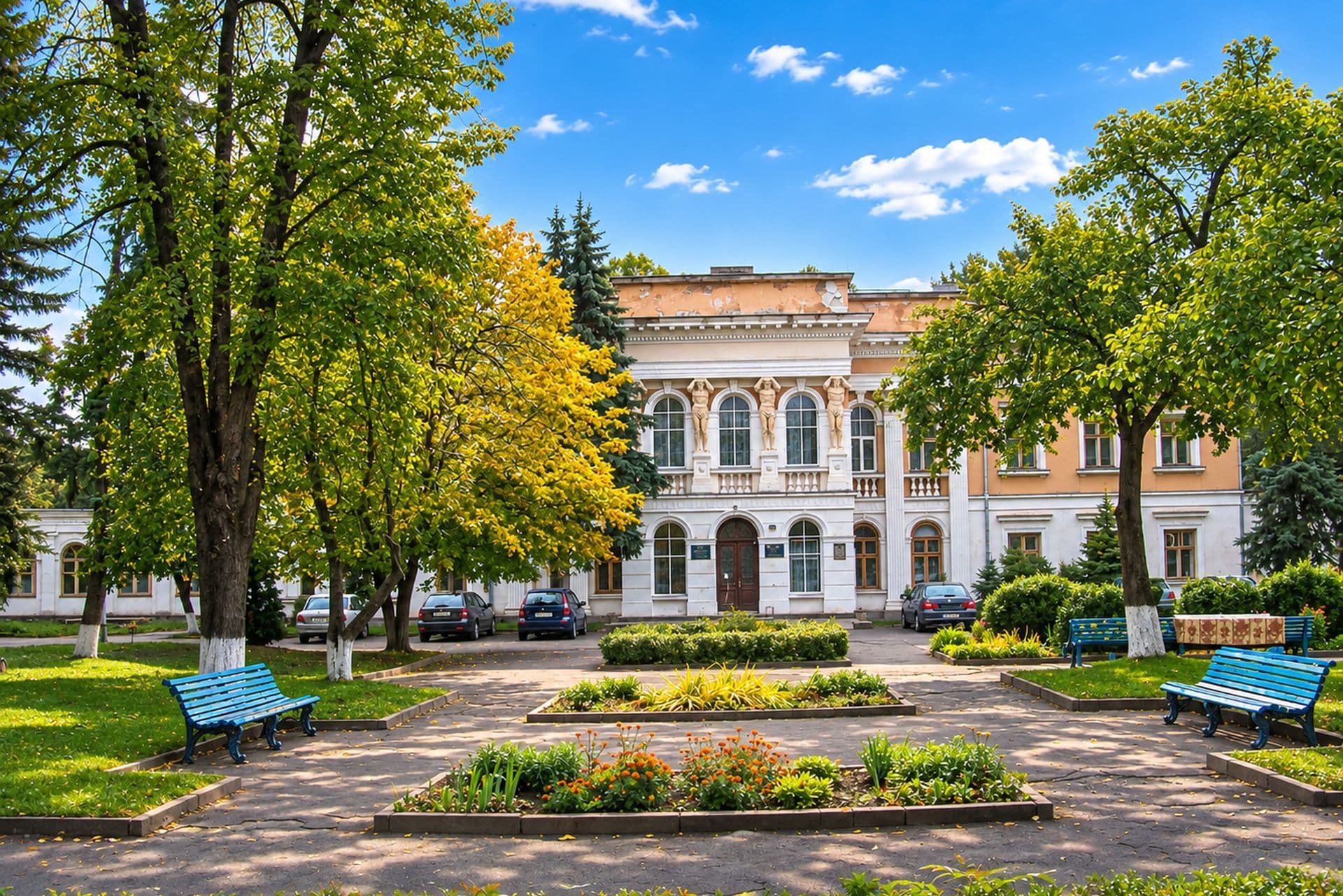 Photo: Кравчук Владислав
 Photo: Кравчук Владислав
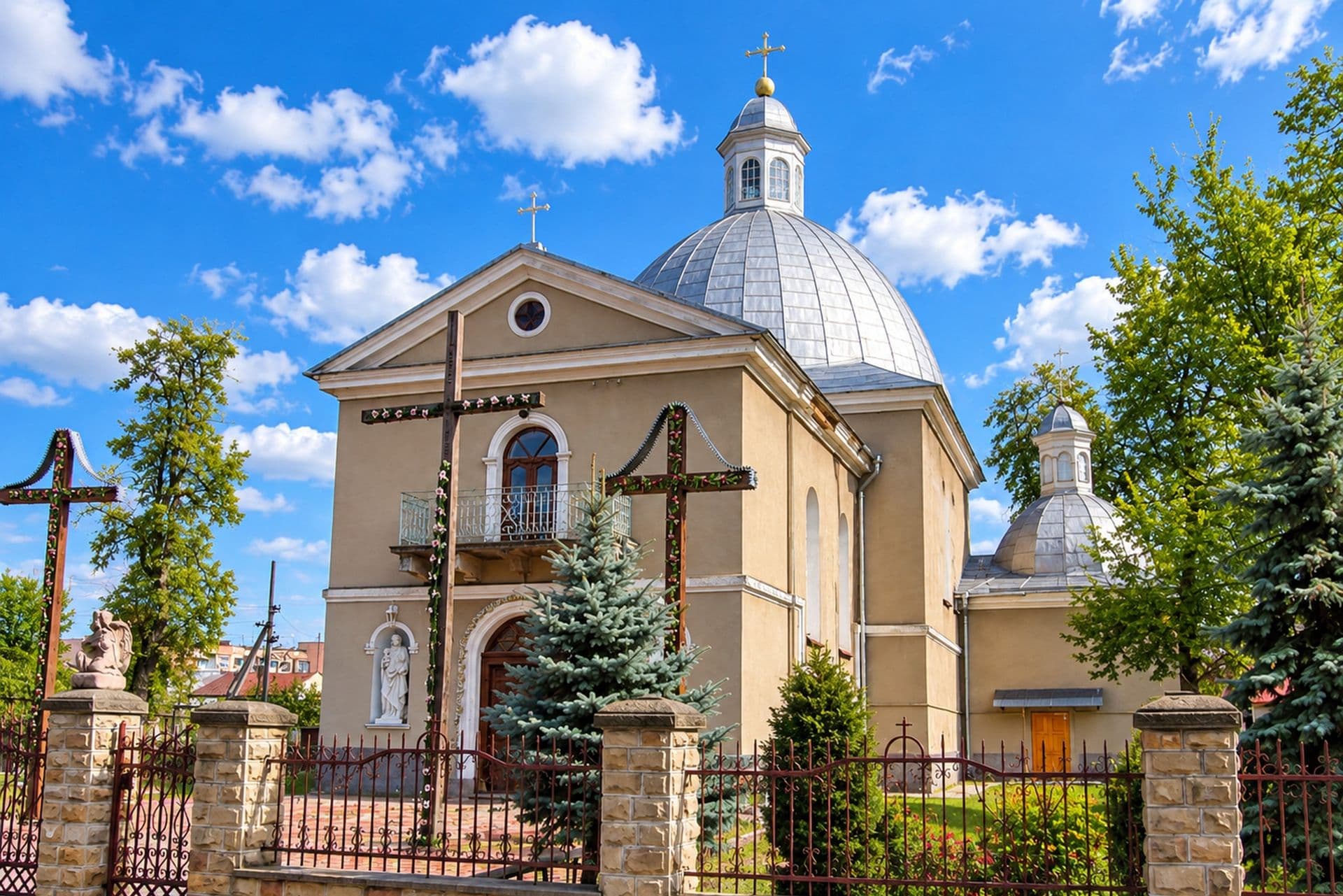 Photo: Кравчук Владислав
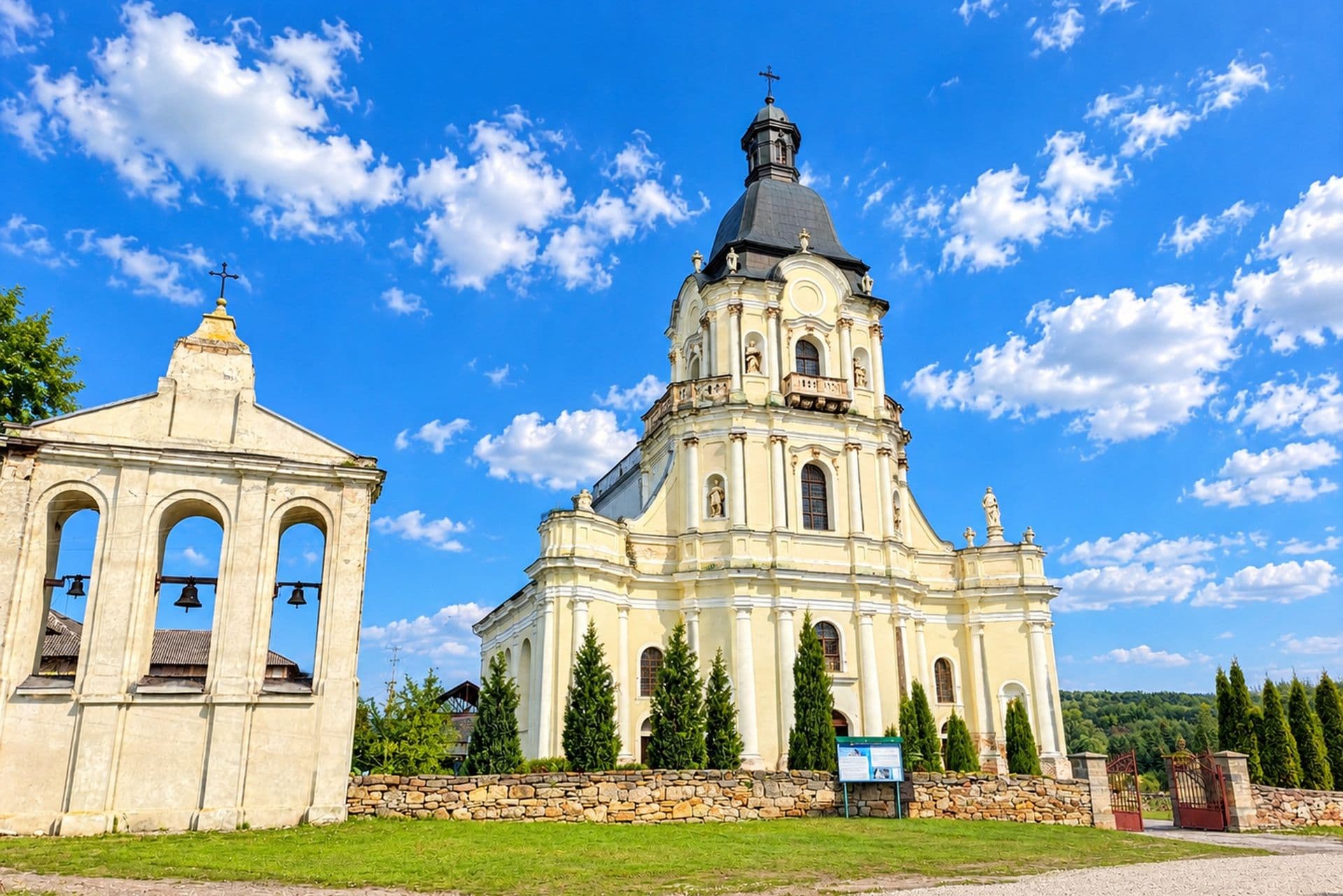 Photo: Кравчук Владислав
Mykulyntsi
The crown jewel of Mykulyntsi is its 16th-century castle, whose mighty walls still bear witness to sieges and the bravery of its defenders. Nearby, other chapters of the past unfold: a palace associated with the Potocki, Konopka and Rey families, and the magnificent Baroque Church of the Holy Trinity. The journey continues to Strusiv, where visitors can discover palace architecture, the Neo-Gothic Church of St Anthony, and a Basilian church built above an ancient cave church. The village’s distinctive character is further enriched by the musical traditions of the “Kobzar” bandura ensemble. Those interested in local history will enjoy visiting the old mill in Ladychyn, while travellers wishing to explore Ukraine’s spiritual heritage more deeply can visit Zazdrist, the birthplace of Patriarch Josyf Slipyj. Konopkivka is known for its mineral waters and spa traditions, while Mykulyntsi is also renowned for its brewing heritage, which has become one of the region’s distinctive features. Between these stops lie river valleys, fields and village streets, where encounters with local people add an extra dimension to the beauty of the journey.
Worth visiting
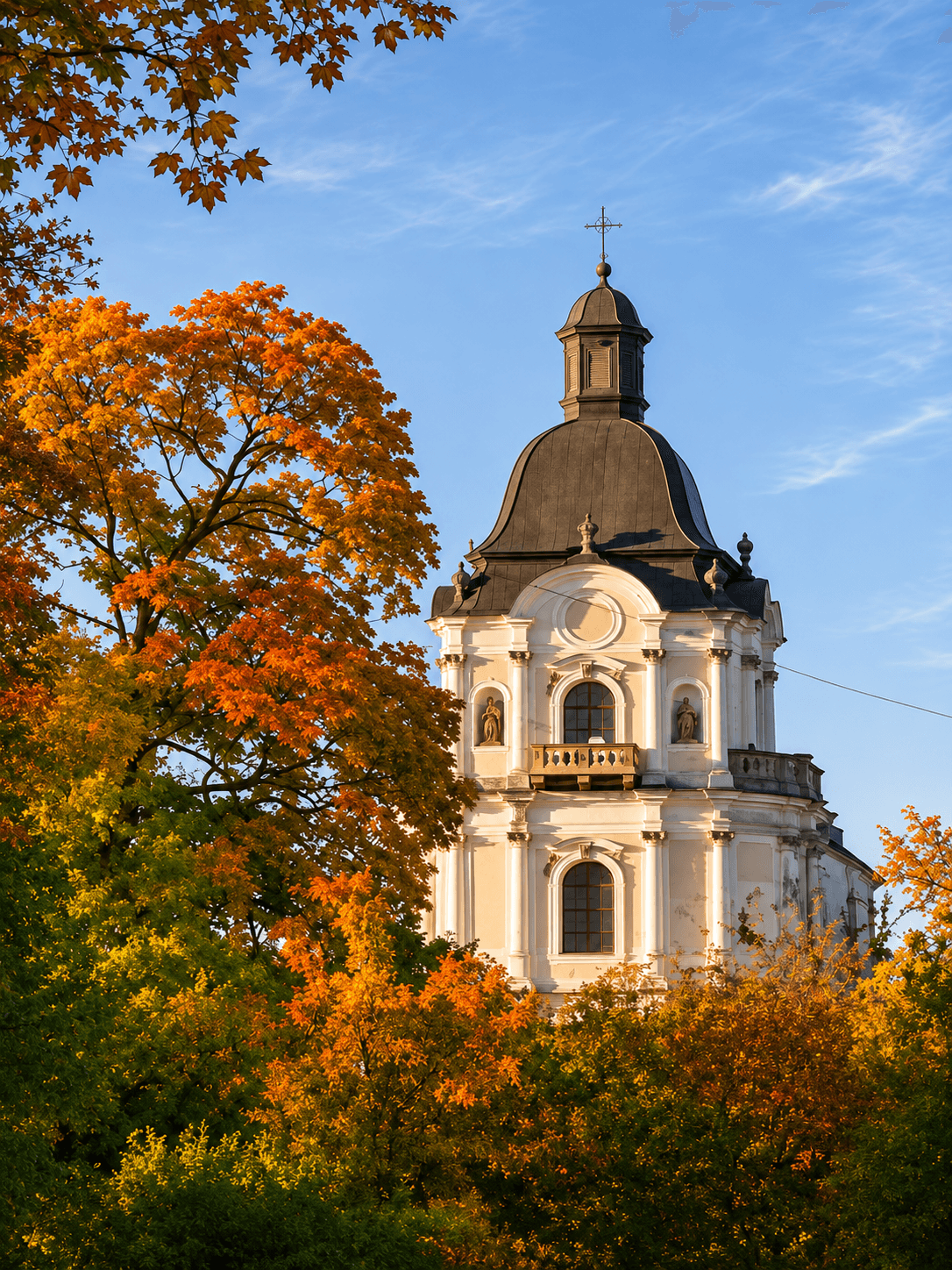
Holy Trinity Church in Mykulyntsi
Holy Trinity Church in Mykulyntsi is an architectural monument of national significance and a striking example of eighteenth-century religious architecture. Its monumental façade, columns and statues of saints make it one of the town’s most distinctive historic landmarks. The church was built between 1761 and 1779, funded by Ludwika Potocka and designed by August Moszyński. The building features expressive Baroque forms and rich sculptural decoration. It stands on the same compositional axis as Mykulyntsi Palace, highlighting the unity of the historic ensemble. The church was closed after the Second World War. It reopened for worship in 1989, and restoration work followed during the 1990s. This landmark will appeal to visitors interested in architecture, history and religious heritage. Take time to appreciate the proportions of the façade, its decorative details and sculptures. A visit can be combined with a walk to the palace and other historic sites in Mykulyntsi.
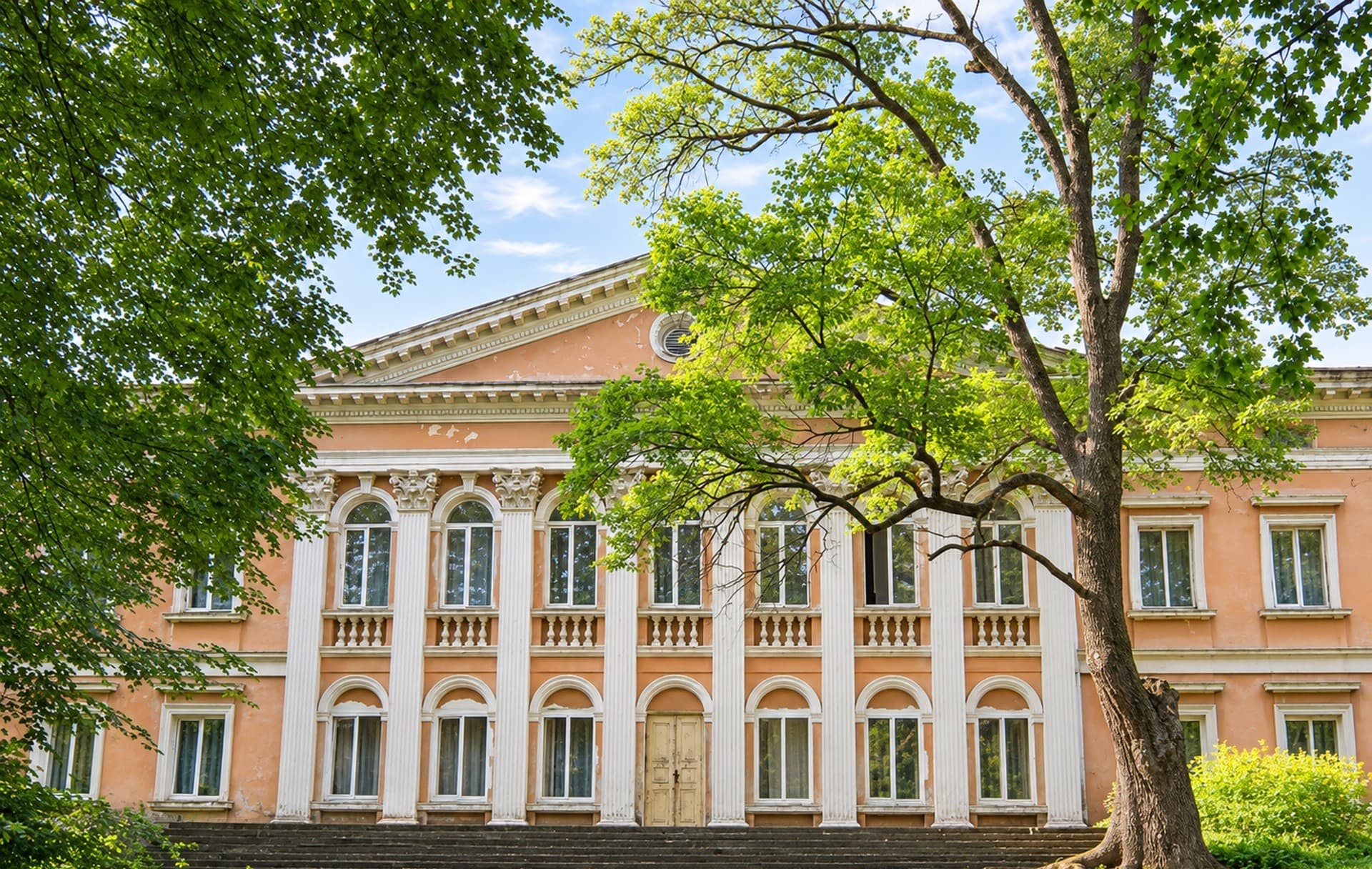
Rey Counts’ Palace in Mykulyntsi
The Rey Counts’ Palace, also known as the Potocki Palace, is one of Mykulyntsi’s most distinctive historic buildings. Set within an old park near the castle, it preserves the character of a former aristocratic residence. The ensemble consists of a main building, side wings and connecting galleries arranged in a horseshoe around a spacious forecourt. Four figures of atlantes on the central façade are among its most striking features. Today, the palace combines its historic legacy with a medical purpose: it houses the Mykulyntsi Regional Physiotherapy Rehabilitation Hospital. A visit to the landmark can be combined with exploring the nearby castle and Holy Trinity Church.
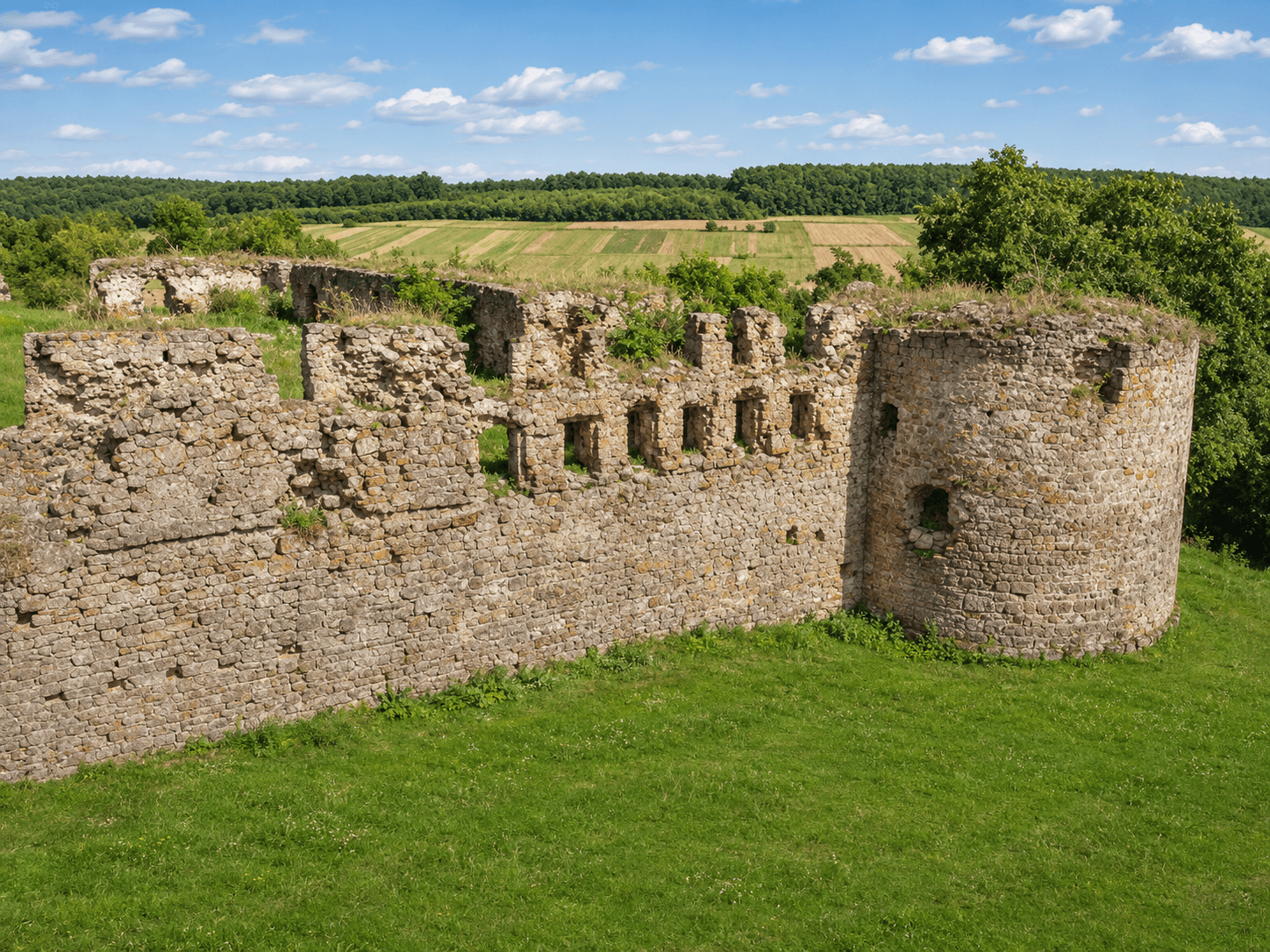
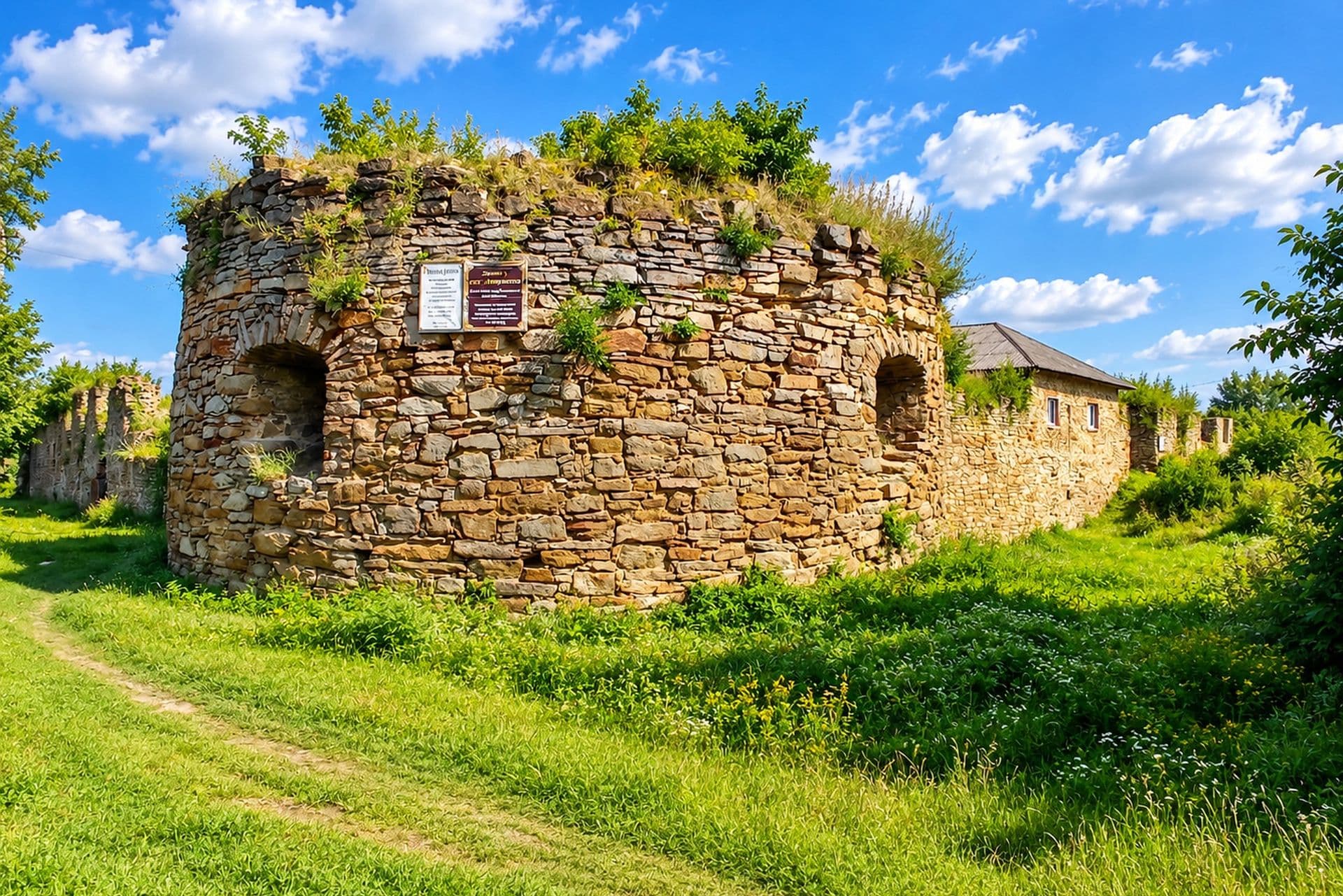
Mykulyntsi Castle
Mykulyntsi Castle stands on a hill above the Seret River, preserving the memory of the town’s defensive past. Its stone walls and round towers form a distinctive part of Mykulyntsi’s historic landscape. The fortress was built around an enclosed quadrangular courtyard. Its surviving remains include sections of defensive walls, two corner towers, entrance arches and parts of the adjoining buildings. Loopholes in the masonry recall the structure’s original military purpose. The castle will appeal to visitors interested in history, fortifications and historic ruins. Exploring its exterior can be combined with a visit to the nearby Rey Counts’ Palace, the old park and Holy Trinity Church.
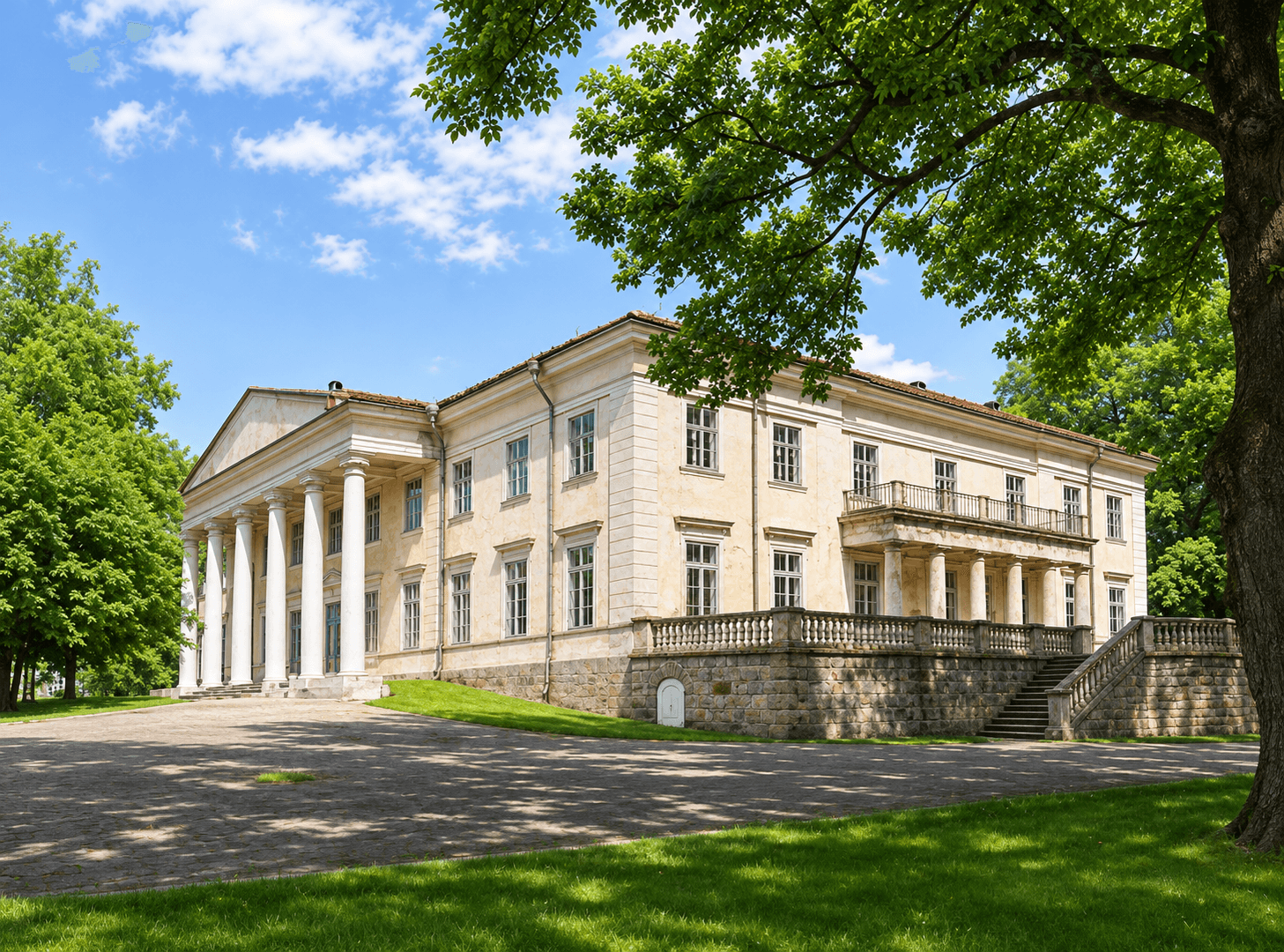
Lanckoroński–Gołuchowski Palace in Strusiv
Strusiv Palace is an architectural landmark in the village of Strusiv, within the Mykulyntsi community in Ternopil Oblast, Ukraine. This former aristocratic residence is distinguished by its balanced proportions, striking colonnades and picturesque setting near the Seret River. The two-storey Neoclassical building has two contrasting façades. The main façade features a six-column portico crowned with a triangular pediment. The park-facing façade overlooks a terrace with a stone balustrade and monumental stairs connecting the palace with the surrounding landscape. The estate’s history is associated with the Rzewuski, Lanckoroński, Baworowski and Gołuchowski families. The palace’s exact construction date remains a subject of research. Alongside the commonly cited late eighteenth-century date, an alternative interpretation places its construction in 1812–1818. This interpretation draws in part on letters sent from Strusiv by Ludwika Rzewuska-Lanckorońska to her son Karol. The suggested involvement of architect Francesco Boffo also requires documentary confirmation. The palace retains the distinctive character of a historic country residence and offers an opportunity to discover Strusiv’s architectural heritage.
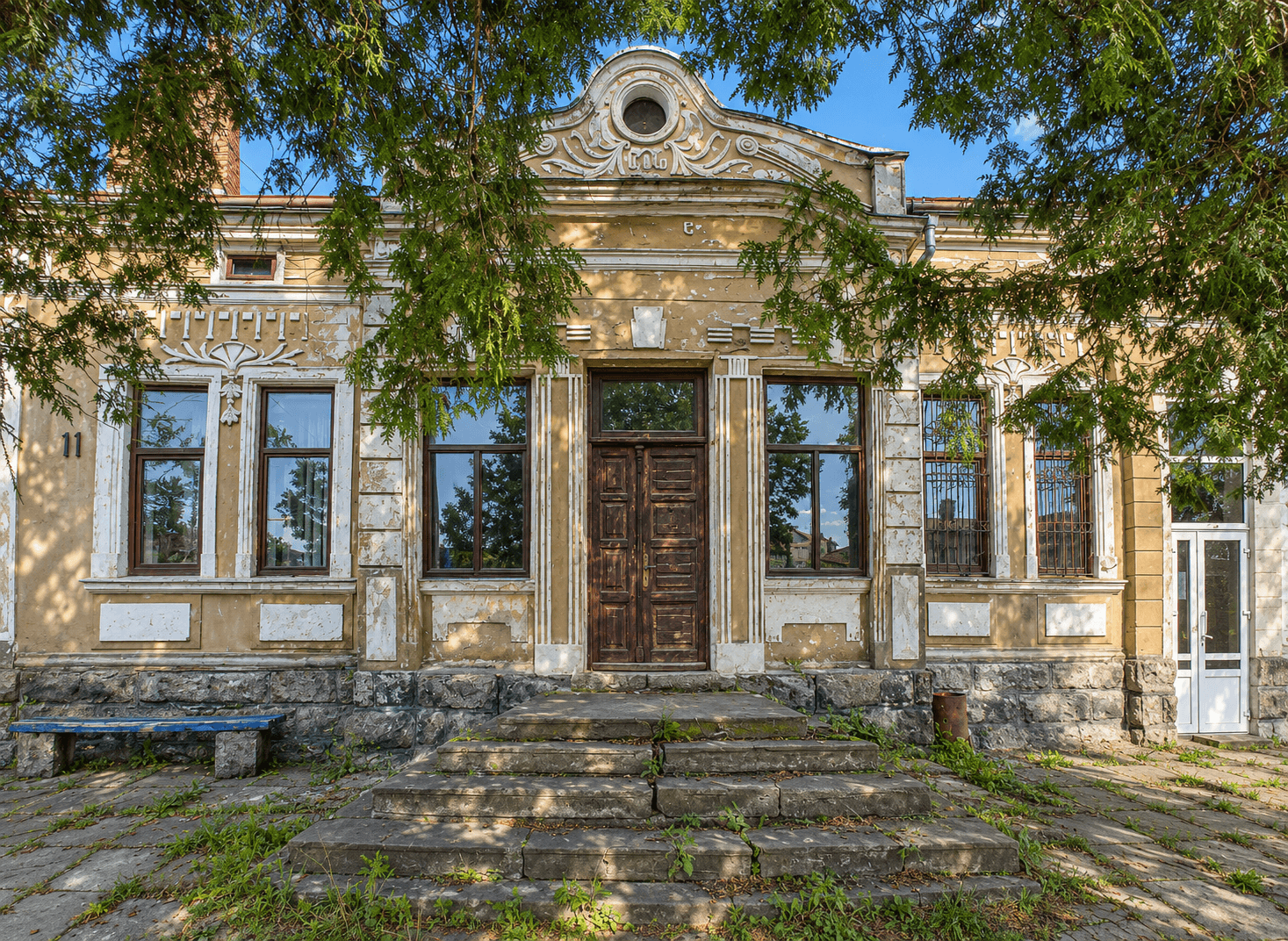
1912 Secession Villa in Mykulyntsi
Among the historic buildings of Mykulyntsi stands a distinctive villa dating from 1912, recognised by its decorative tower and the raised inscription “Villa” on its façade. It is a striking example of late Secession architecture, preserving the atmosphere of a Galician town in the early twentieth century. The façade combines geometric ornament with stylised plant motifs. A decorative tower clad in overlapping metal scales gives the building its distinctive silhouette and makes it stand out within the surrounding streetscape. According to local historical accounts, the villa was commissioned by a retired officer of the Austrian army. Heritage records, however, describe it as a former lawyer’s private residence. The history of its earliest owners remains a subject for further research. The building served various purposes over the years, including housing the settlement council. Today, the villa forms an important part of Mykulyntsi’s architectural heritage and offers an appealing stop for visitors who enjoy discovering the unusual details of historic buildings.