Vidpochynok Karahova
Vidpochynok Karahova
Location description
“Vidpochynok Karakhova ” in the village of Kuriany is a place where you can escape the daily routine, reconnect with nature, and appreciate its true value. Nature brings us peace, harmony, and strength, while time spent with family and friends surrounded by its beauty becomes truly special.
Enjoy our swimming pool, sauna, hot tubs, cosy gazebos, and relaxing terrace. Comfortable accommodation and exciting excursions will make your stay truly memorable!
Good to know
- Transport
- Car, On foot, Bicycle
Nearby locations
More locations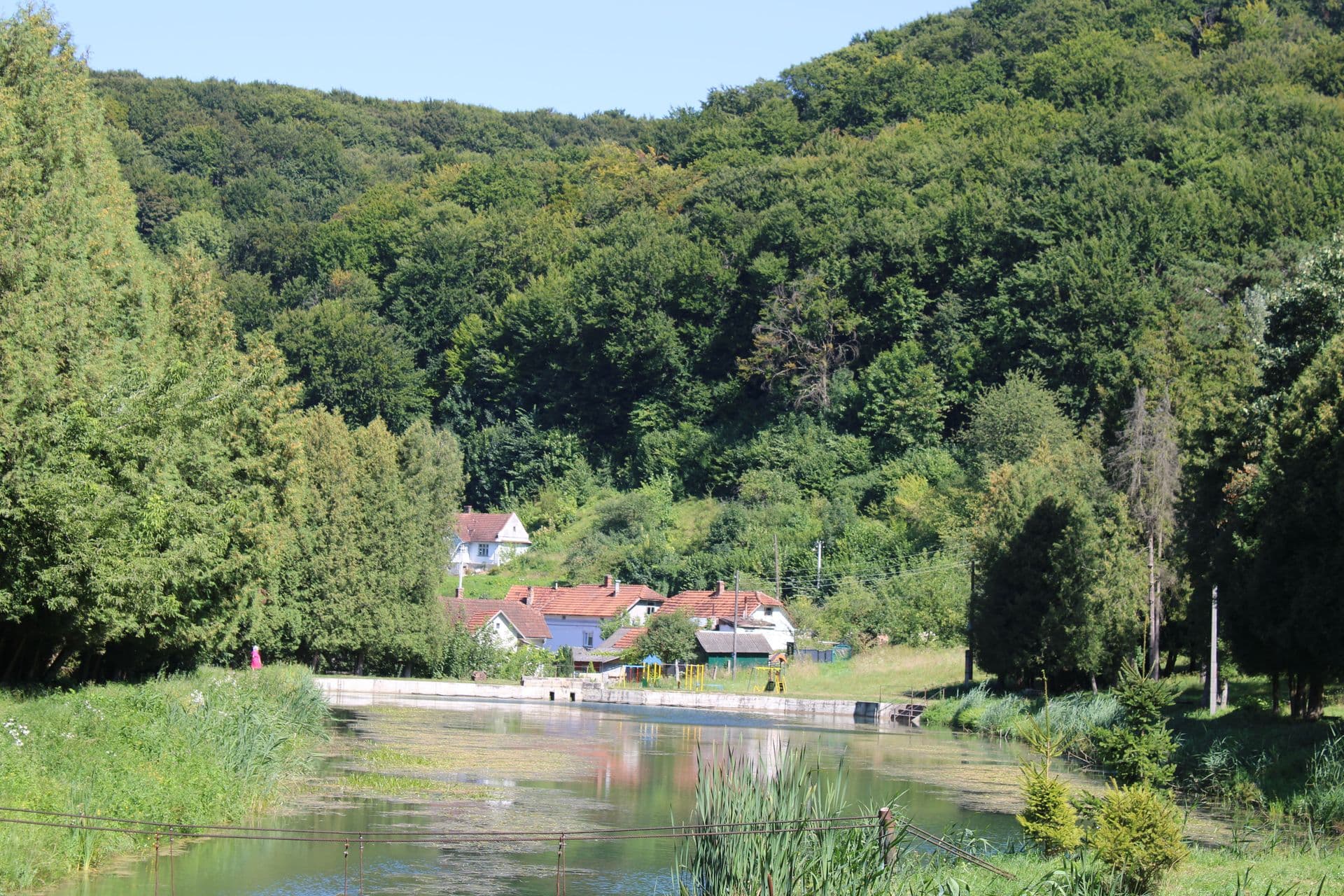
Raivskyi Park
Raivsky Park is a park-monument of landscape art of national importance, located in the village of Rai near the city of Berezhany. The history of the park is connected with the famous magnate families of the Sinyavskys, Lubomirskys and Potocki. In the 17th century, there was a country hunting residence of the Sinyavskys. The formation of the park began in the 18th century. In 1816, the estate passed into the possession of Count Alexander Potocki, under whom the palace was rebuilt and the park territory was arranged. In 1892, the park was reconstructed by the famous landscape architect Valerian Kronenberg. It was decorated with picturesque alleys, ornamental plantings, ponds, an artificial island and a waterfall. Today, the 20-hectare Raivsky Park is a valuable natural, historical and cultural heritage of the Berezhan region.
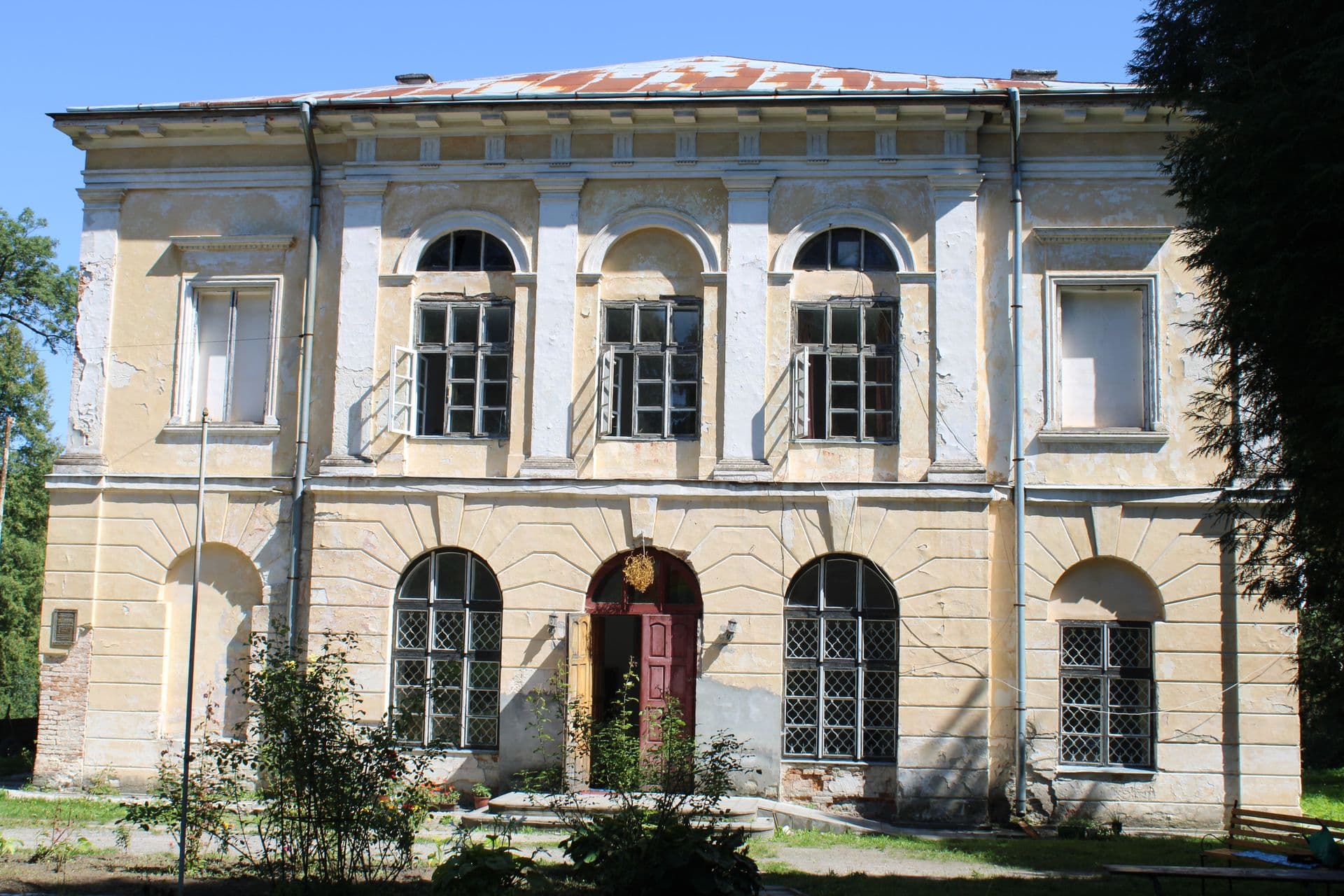
Potocki Hunting Palace
Architectural monument of national importance. An important architectural and artistic building located in the village of Rai. In the second half of the 18th century, on the initiative of the owner of the surrounding lands, Isabella Lubomirska, a palace was built, and a park was created on the basis of the forest massif. In 1816, the first owner of the Brzeża lands from the Potocki family, Oleksandr Potocki, ordered the construction of a new park and the construction of a palace, giving it expressive features of late classicism. A local historian of the 1930s, Stanislav Vyshnevsky, stated in his guidebook that during the Potocki era, the palace contained paintings by prominent artists Jan Matejko and Rembrandt van Rijn.
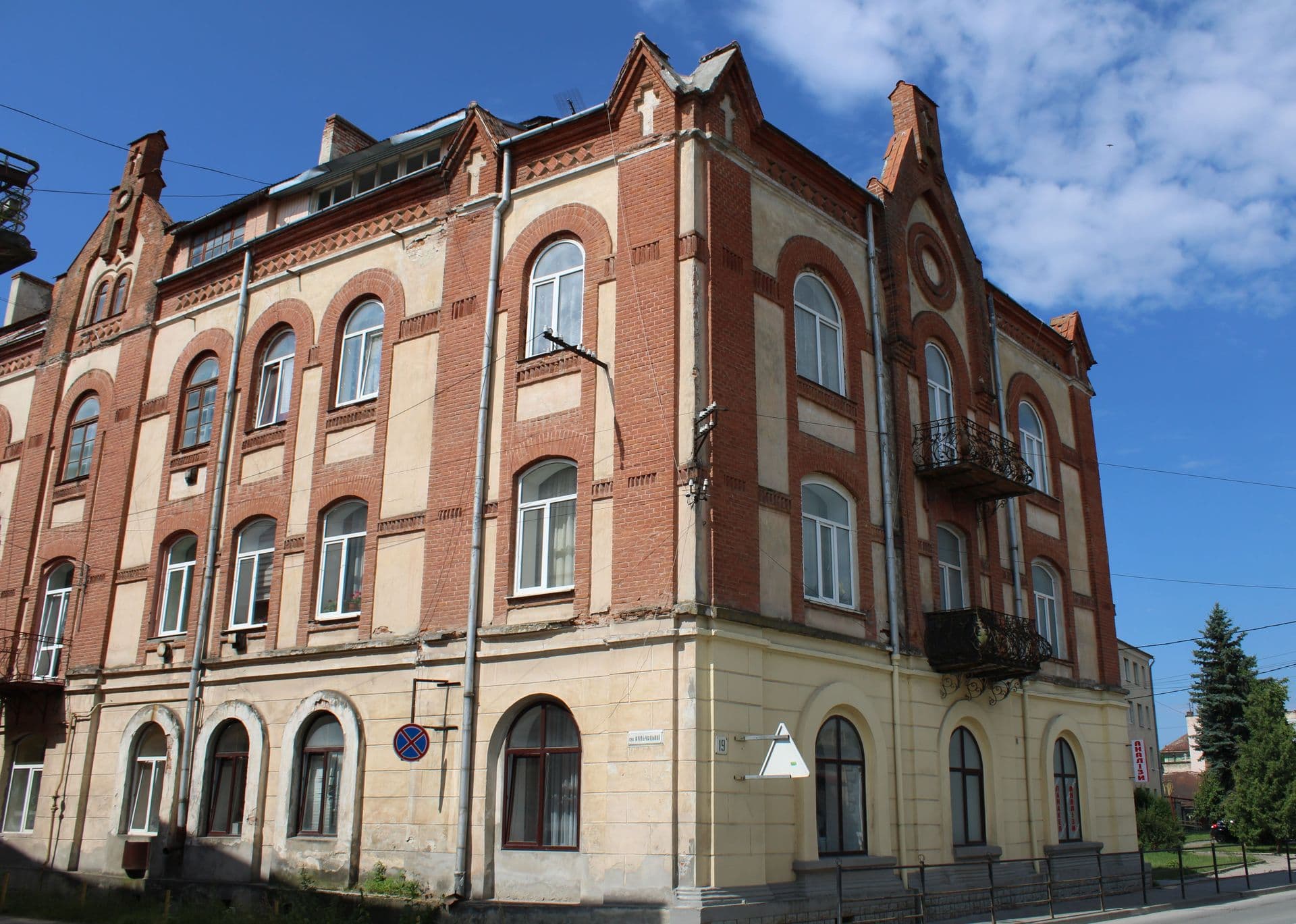
Catholic House
June 12, 1898, marked an unforgettable event that has remained in the memory of the local community and opera enthusiasts. The renowned Ukrainian opera singer of international fame, Solomiya Krushelnytska, performed on the stage in Berezhany—specifically in the hall of the "Catholic House," a building constructed in the early 1890s by the Roman Catholic parish priest, Leonard Solecki. For that era, it was a substantial structure, featuring a spacious hall with a capacity of 400 to 500 seats. The building has survived to the present day and remains part of the city’s historic architectural fabric.
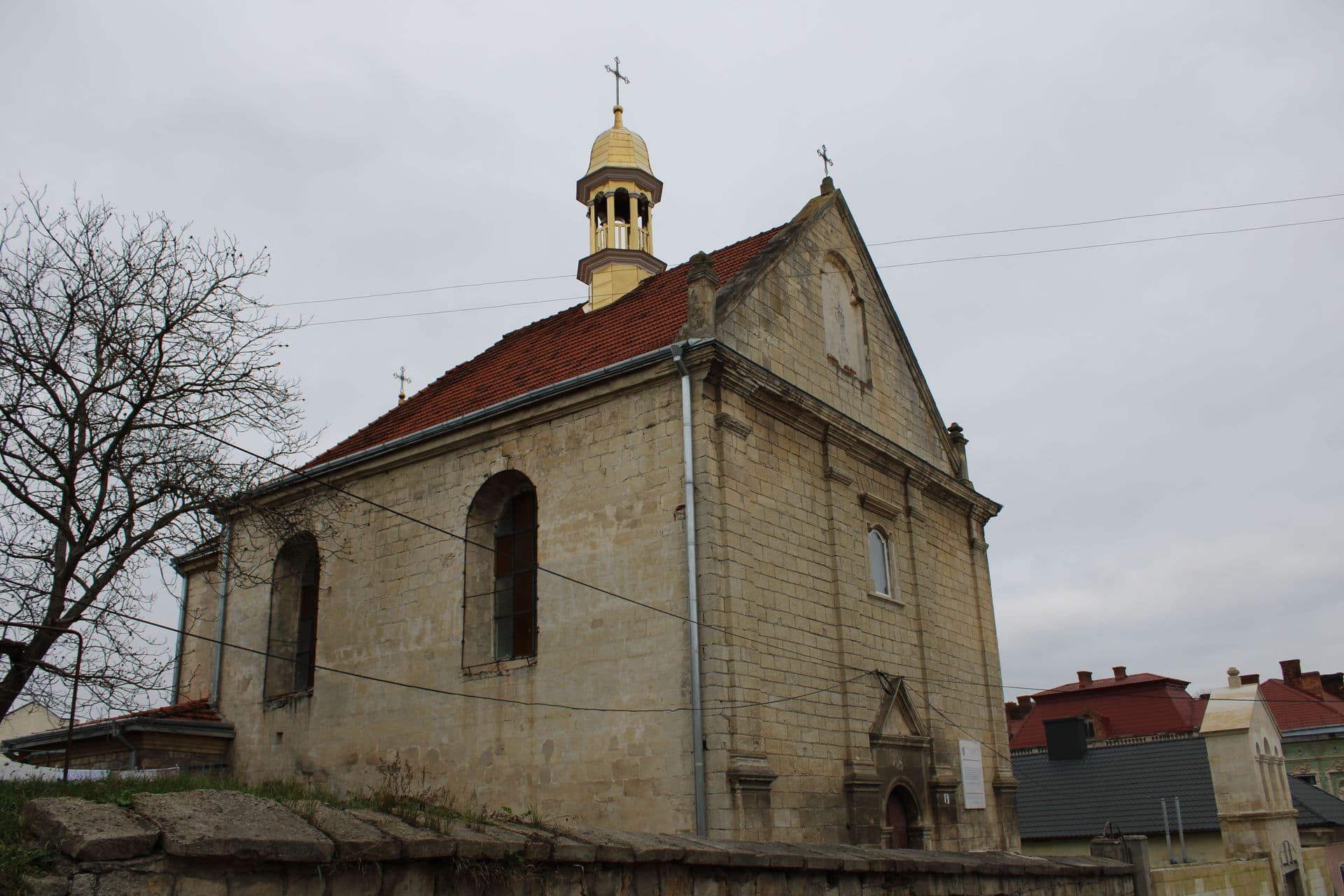
Armenian Church of Saint Gregory
On May 7, 1746, the owner of the city, Augustus Alexander Czartoryski, granted permission to build a brick church. The construction was completed eighteen years later through the efforts of priest Deodat Gorbaz. On September 11, 1791, a solemn consecration took place. In 1828, the interior of the church was decorated with carvings, wall paintings, and a kind of decorative stucco.The ascetic external beauty of the temple is favorably emphasized by the decorative turret-signature above the nave, the pilasters of the Tuscan order of the central facade, the triangular pediment with a deaf arched niche, the wide frontal cornice and the decorative sculptural pincers at the corners of the pediment. The temple is an example of the sacred architecture of the Baroque period with reminiscences of the previous era.
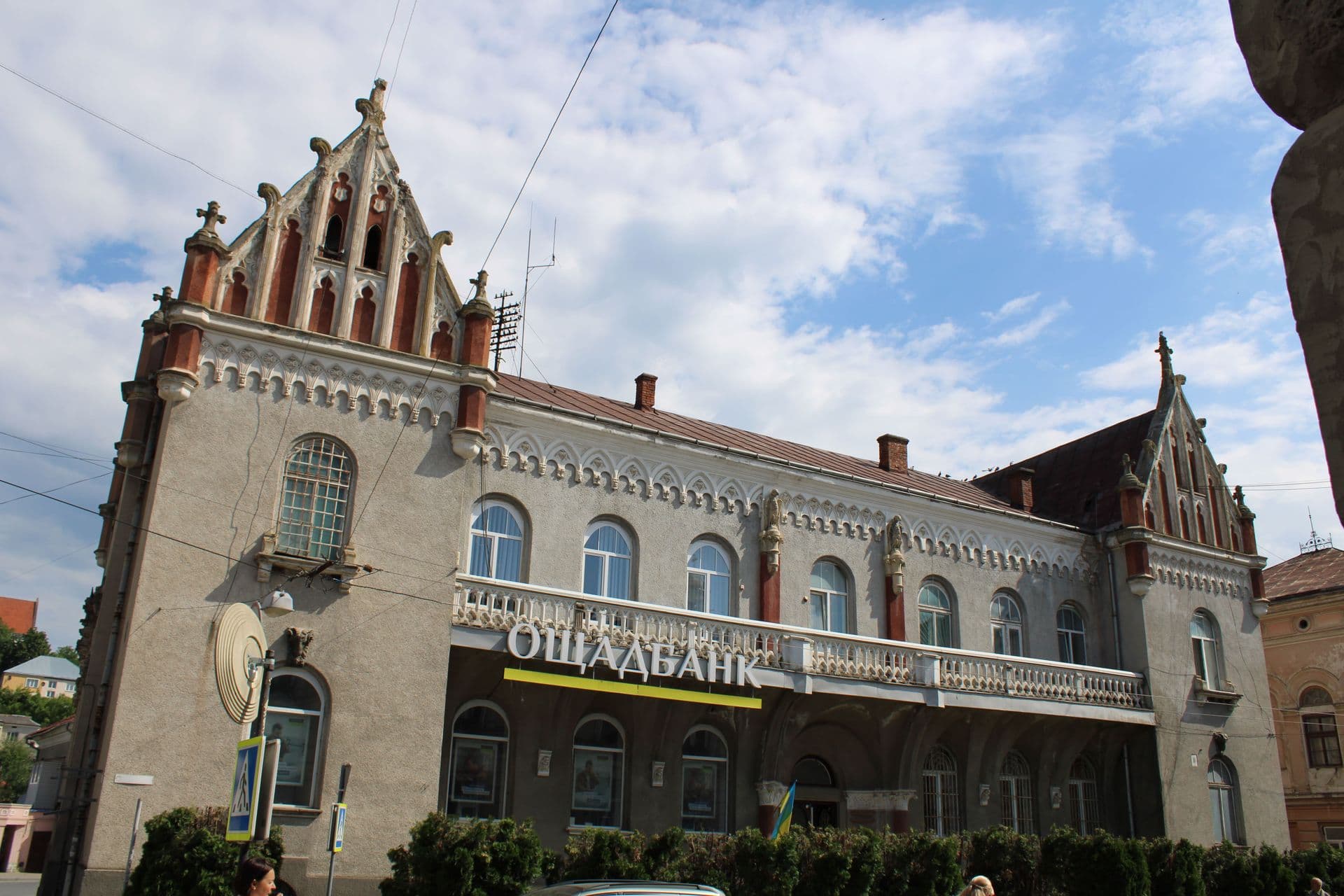
Bank
An architectural monument of local significance. The Savings Bank building was erected in 1910 opposite the District Council building, based on a design by Ipolit Śliwiński—one of the most renowned Lviv architects of the late 19th and early 20th centuries. In 1927, it was renamed the Municipal Savings Bank of the Berezhany District. Ferdinand Mareš served as the bank's first director. Until 1939, the meeting hall housed a valuable gallery of paintings.
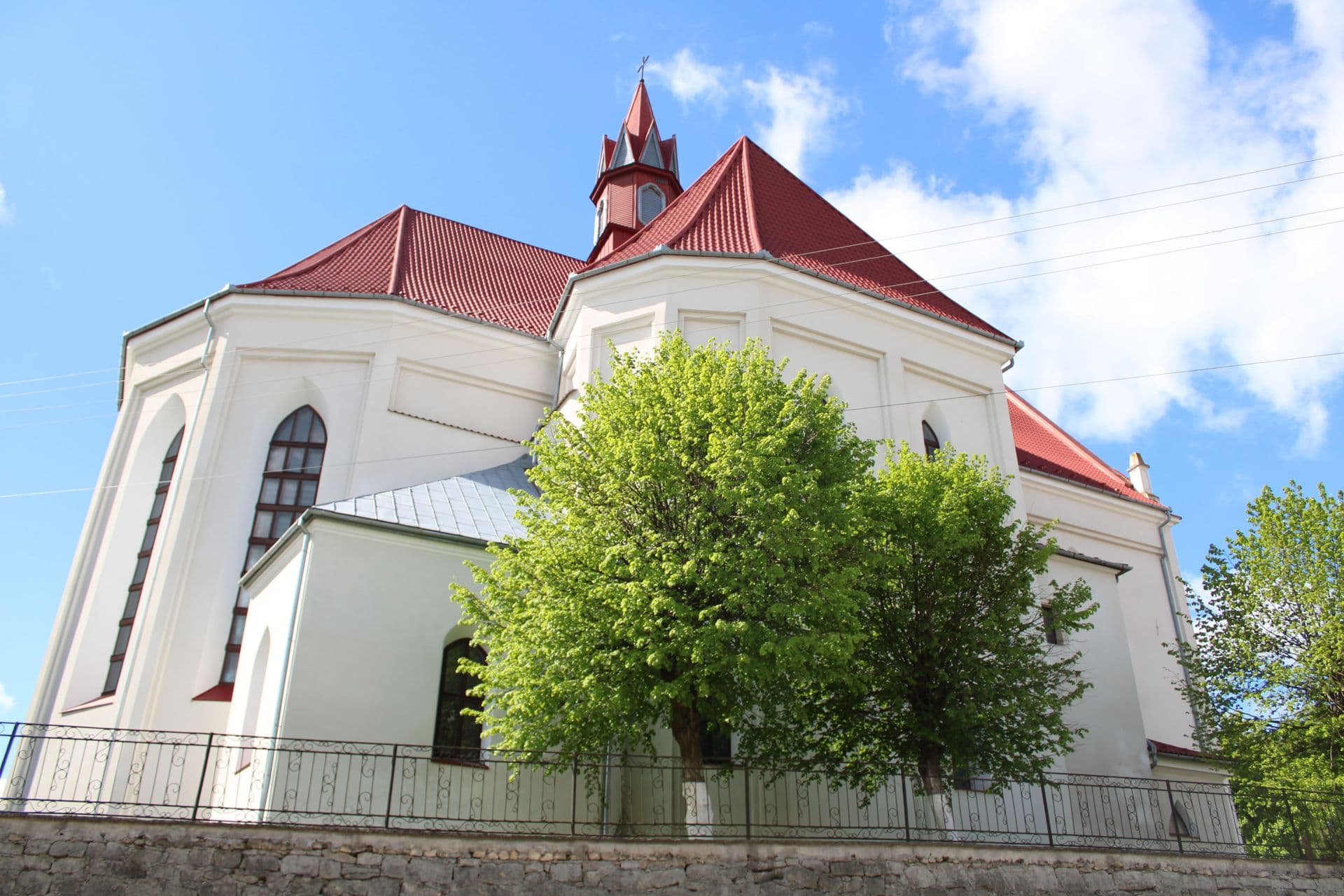
Church of the Holy Apostles Peter and Paul
In 1590-1600, Adam Hieronymus and Kateryna Sieniawski built the parish church of the Nativity of the Blessed Virgin Mary. It was built in the Gothic style according to the design of Pavel Vloh (known as the Roman), but over time, Baroque features appeared. The talented sculptor Ioan Pfister contributed to the decoration of the church. The portal, the arch with rosettes, the carved columns, covered with floral ornaments and images of angels and the Sieniawski coats of arms, still fascinate visitors. In 1996, the church was returned to the Roman Catholic community of the city and consecrated under the name of the holy apostles Peter and Paul. Appropriate repairs were carried out in the interior, the roof was covered, and the chapel in the southern part of the courtyard was restored. A fragment of the valuable fresco with coat of arms cartouches above the entrance door was restored. Today it is a fully functioning parish church. The church is recognized as an architectural monument of national importance.
Reviews

No reviews yet
Be the first to share your experience.
Updated October 30, 2026.
Check opening hours, access rules and safety restrictions with the relevant provider before visiting. Listing does not mean the Department guarantees third-party services.