Church of St. Nicholas
Church of St. Nicholas
Location description
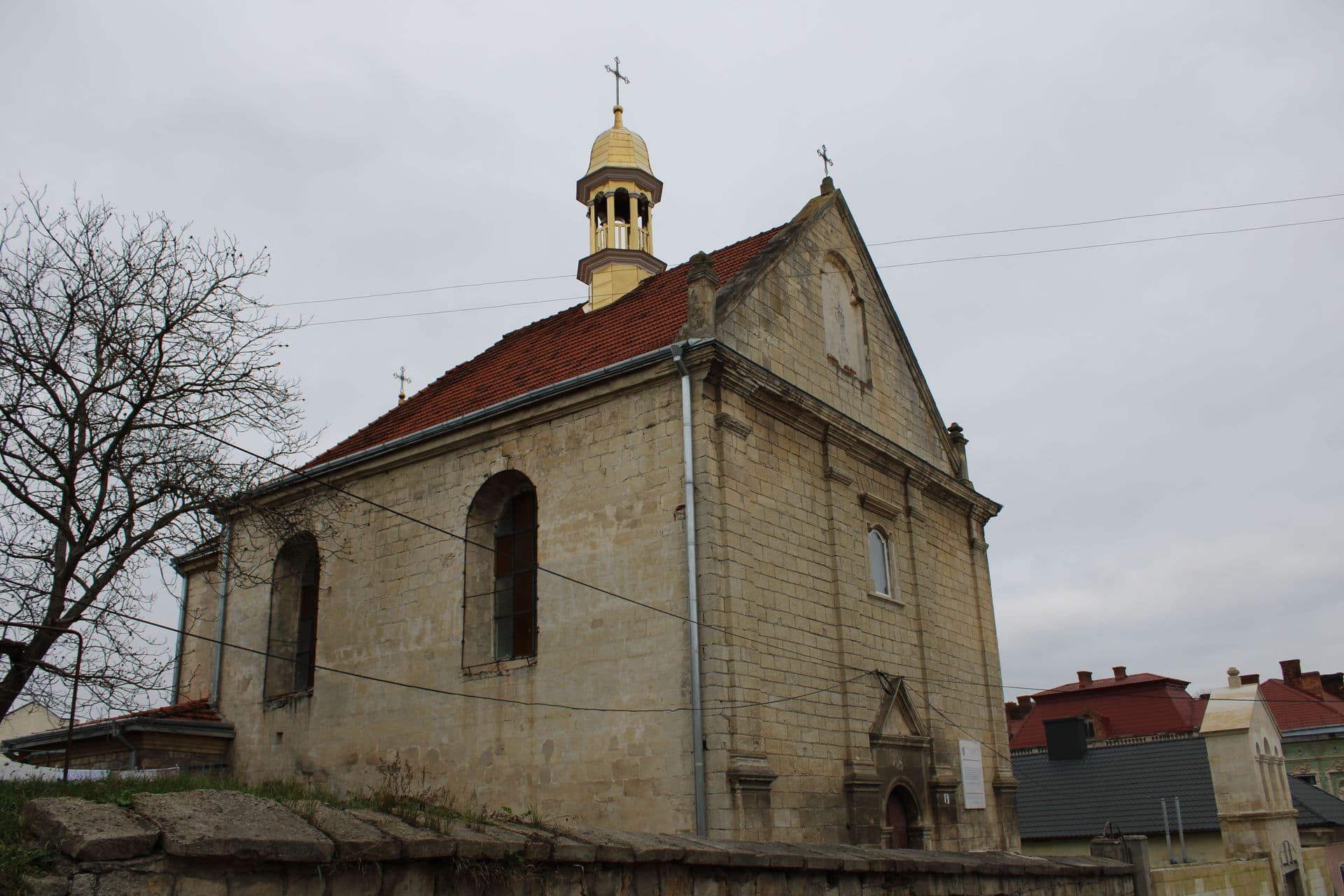
The church is one of the oldest in the city and has practically not changed during its long history. Entering the sanctuary, it is as if you are traveling in time: the church is decorated according to the traditions of ancient Galicia. The church was built, as written sources indicate, between 1584 and 1610. There is also the date "1691" - apparently, the church was rebuilt then. The wooden bell tower has not survived - it was replaced by a brick one over the gate, on the wall of which the date "1867" is visible. The church is an architectural monument of national importance. Now the church belongs to the OCU community.
Good to know
- Best time
- Spring, Summer, Autumn, Winter, All year
- Road
- Asphalt
- Cost
- Free
Nearby locations
More locations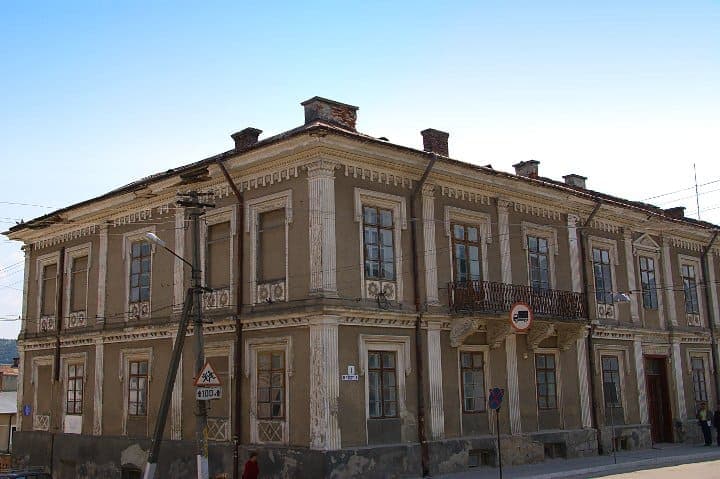
"Native School" building
The two-story, asymmetrical "Ridna Shkola" (Native School) building is a striking example of classical architecture, featuring ethnic motifs on its central facades. It was constructed in the mid-19th century (around 1815). Initially, the building housed only the office of the local branch of the Ukrainian Pedagogical Society. On October 13, 1922, a four-grade school was opened there. In late August 1932, the school was reorganized into a five-grade institution. The building underwent significant reconstruction in the early 1930s. The school and the local branch of the "Ridna Shkola" Society remained in the building until the end of 1939, when they were shut down by the Soviet authorities.
Church of the Holy Apostles Peter and Paul
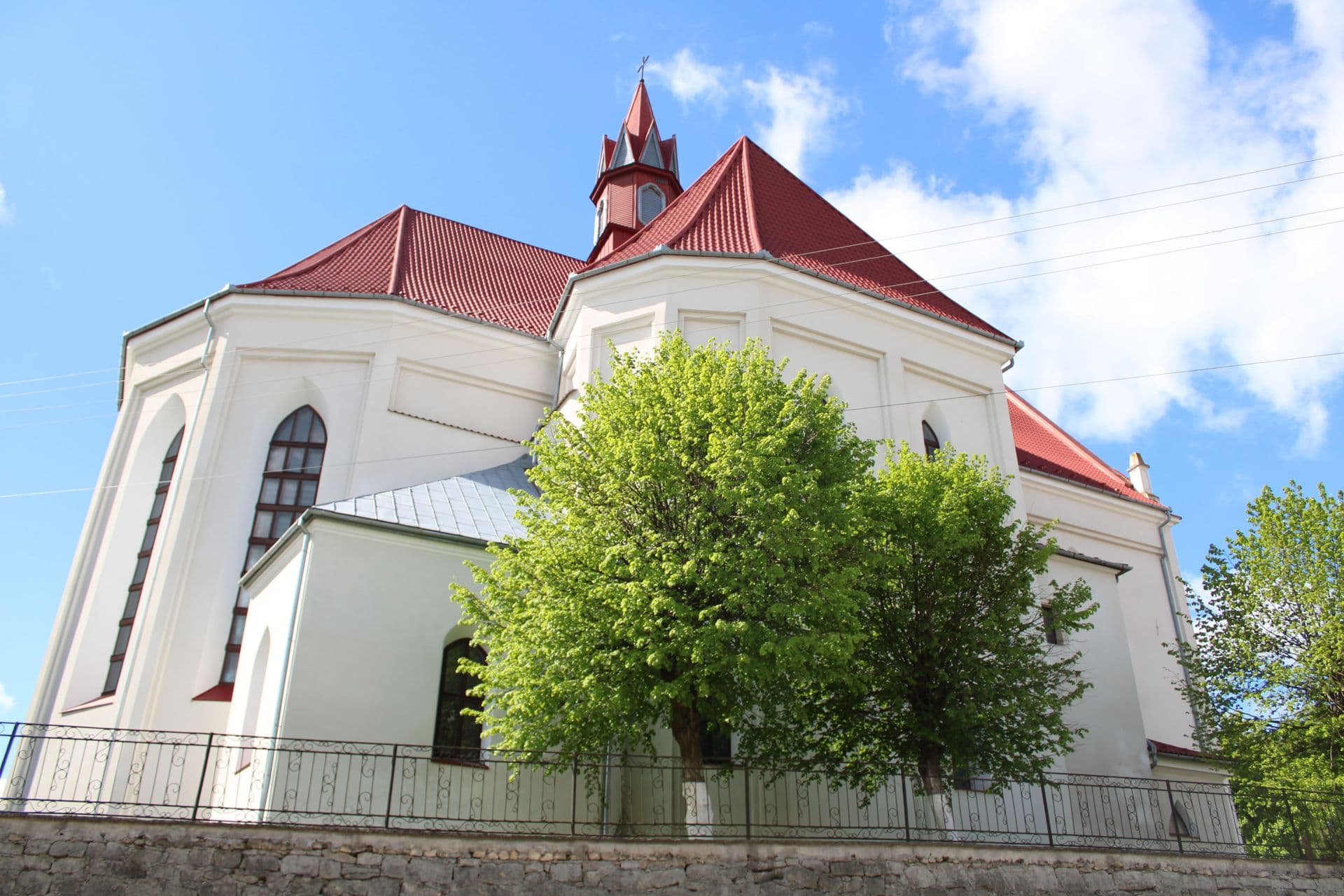
In 1590-1600, Adam Hieronymus and Kateryna Sieniawski built the parish church of the Nativity of the Blessed Virgin Mary. It was built in the Gothic style according to the design of Pavel Vloh (known as the Roman), but over time, Baroque features appeared. The talented sculptor Ioan Pfister contributed to the decoration of the church. The portal, the arch with rosettes, the carved columns, covered with floral ornaments and images of angels and the Sieniawski coats of arms, still fascinate visitors. In 1996, the church was returned to the Roman Catholic community of the city and consecrated under the name of the holy apostles Peter and Paul. Appropriate repairs were carried out in the interior, the roof was covered, and the chapel in the southern part of the courtyard was restored. A fragment of the valuable fresco with coat of arms cartouches above the entrance door was restored. Today it is a fully functioning parish church. The church is recognized as an architectural monument of national importance.
Town Hall
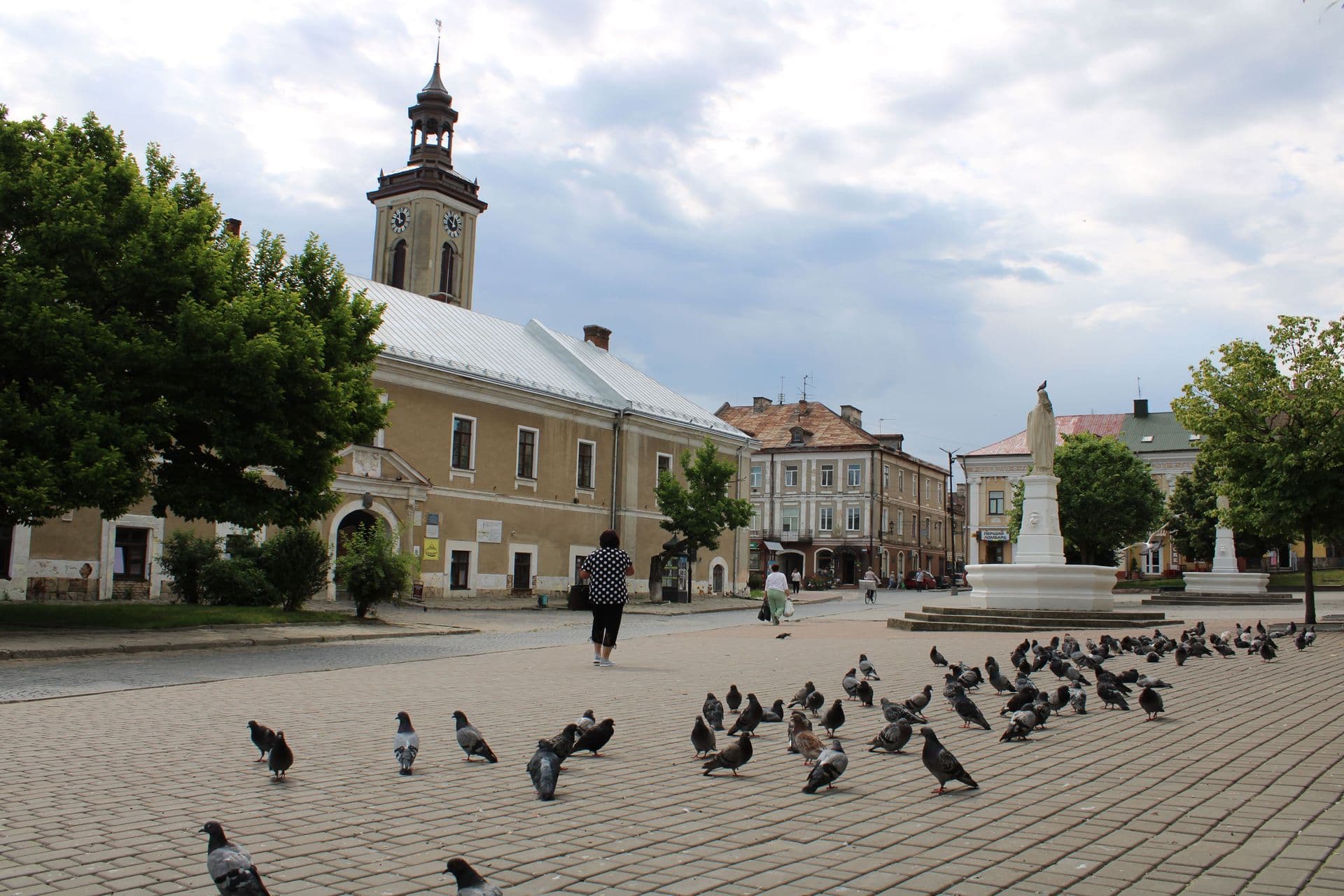
Located on Rynok Square, it is an architectural monument of national significance. The current structure was built in 1803 at the initiative of Izabella Lubomirska, the owner of the surrounding lands. It was constructed according to a design by the Moravian architect Friedrich Gisges. The clock tower—a traditional feature of a town hall—was added in 1811.
Berezhany Museum of Local History
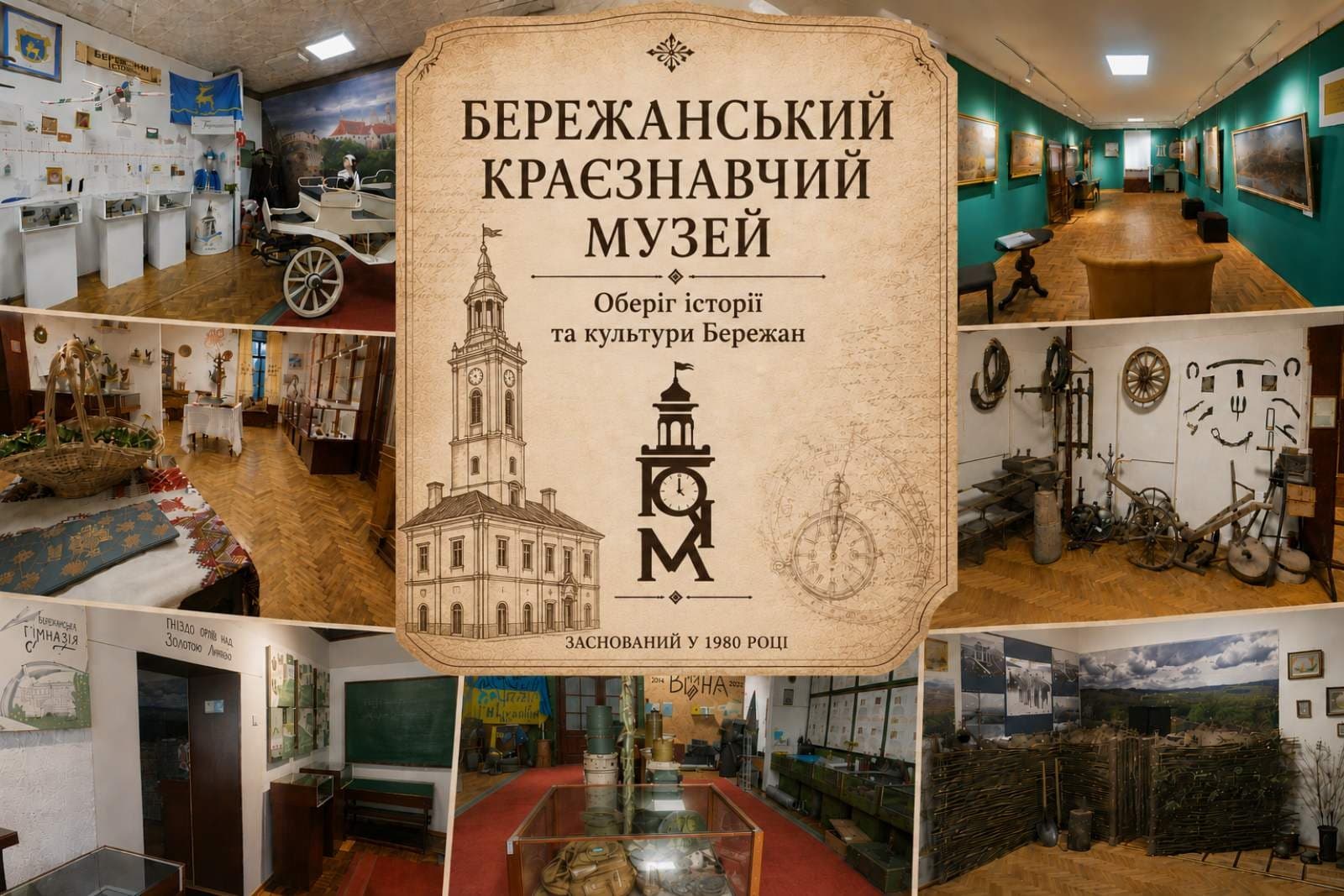
Berezhany Museum of Local History Visit the Berezhany Museum of Local History — a place where the history of one of Galicia's most beautiful historic towns comes to life. This is the perfect starting point for discovering Berezhany! The museum is housed in the magnificent Berezhany Town Hall, an architectural monument of national significance that has graced the historic Market Square for more than two centuries. Its extensive collections, unique exhibitions, and dedicated staff make it a true guardian of the history and cultural heritage of the Berezhany region. The museum's spacious exhibition halls house thousands of artefacts that tell the story of the region's centuries-old history, folk traditions, prominent figures, and heroic chapters in the Ukrainian people's struggle for independence. The museum offers not only a journey into the past but also an excellent starting point for exploring historic Berezhany. Experienced guides will help you discover the town from a new perspective: hear the legends of the old Market Square, uncover the secrets of historic buildings, learn about remarkable personalities, and admire architectural treasures that preserve the memory of generations. Every guided tour brings history to life through fascinating stories, little-known facts, and an opportunity to experience the town's unique atmosphere. The Berezhany Museum of Local History reveals a side of the town that no guidebook can truly capture! History The museum opened on September 20, 1980, in specially adapted premises within the Town Hall. Its founder and driving force was local historian Stepan Dudar, who was later awarded the title of Honorary Citizen of Berezhany. The town's museum traditions date back to the 1920s and 1930s, when a Ukrainian museum operated in Berezhany. After a break of more than four decades, the establishment of the new local history museum in 1980 marked an important milestone in the town's cultural life and gave fresh impetus to the development of museums throughout the Berezhany region. Exhibitions and Unique Collections The Berezhany Museum of Local History holds more than 27,000 museum objects, some of which are displayed across 16 themed exhibition halls. The exhibitions introduce visitors to the region's history, archaeology, ethnography, natural environment, and cultural heritage, from ancient times to the present day. Particularly noteworthy are the exhibitions dedicated to the Berezhany Gymnasium, traditional Ukrainian life and crafts, literary heritage, the Ukrainian Sich Riflemen and the heroic battles on Mount Lysonia, the Second World War, and the Ukrainian people's struggle for independence. A separate museum room explores the history, everyday life, and culture of Ukrainians deported from Nadsiannia, Pidliashshia, Kholmshchyna, and Lemkivshchyna between 1944 and 1946. One of the museum's artistic highlights is Ukraine's largest collection of paintings by Volodymyr Savchak, a Ukrainian artist born in Berezhany who lived and worked in Australia and gained international recognition. Another valuable collection consists of unique historical materials relating to the Starukh family, prominent figures in the Ukrainian national liberation movement. Visitors can also explore an exhibition of antique furniture from late 19th- and early 20th-century urban interiors, the historical exhibition "Berezhany: Events, Landmarks and People", and the renovated "Nature" hall, which is particularly engaging for younger visitors. The museum's exhibition halls regularly host art exhibitions, presentations, and cultural events. Museum Activities The Berezhany Museum of Local History is a vibrant cultural and educational centre where history meets creativity, research, and engaging learning experiences. The museum organises academic conferences, educational lessons, lectures, workshops, interactive quests, creative meetings, and book presentations. An annual academic conference, "Museum Space: A Dialogue Between History and the Present", has become an established tradition, bringing together local historians and researchers from Ukraine and abroad. The museum also publishes "Chronicle of the Hometown", a local history journal dedicated to the historical and cultural heritage of the Berezhany region. For children, the museum organises themed day camps as part of the "Museum as a Learning Platform" project, along with interactive activities and educational events. Special attention is given to the children's storybook series "The Adventures of Zhenia the Little Deer", which introduces young readers to the history of their hometown in an entertaining and accessible way. Museum staff offer guided tours of the permanent exhibitions and temporary displays, walking tours through the historic centre of Berezhany, excursions beyond the town, and special tours as part of the "Weekend Routes" programme. Visit the Berezhany Museum of Local History to discover the rich history, cultural treasures, and unforgettable atmosphere of historic Berezhany! Contact Information Address: 1 Rynok Square, Berezhany, Ternopil Oblast, Ukraine Phone: +38 (03548) 2-18-79 Email: bkm1980@ukr.net
Armenian Church of Saint Gregory
On May 7, 1746, the owner of the city, Augustus Alexander Czartoryski, granted permission to build a brick church. The construction was completed eighteen years later through the efforts of priest Deodat Gorbaz. On September 11, 1791, a solemn consecration took place. In 1828, the interior of the church was decorated with carvings, wall paintings, and a kind of decorative stucco.The ascetic external beauty of the temple is favorably emphasized by the decorative turret-signature above the nave, the pilasters of the Tuscan order of the central facade, the triangular pediment with a deaf arched niche, the wide frontal cornice and the decorative sculptural pincers at the corners of the pediment. The temple is an example of the sacred architecture of the Baroque period with reminiscences of the previous era.
The Regional Communal Museum of Bohdan Lepky
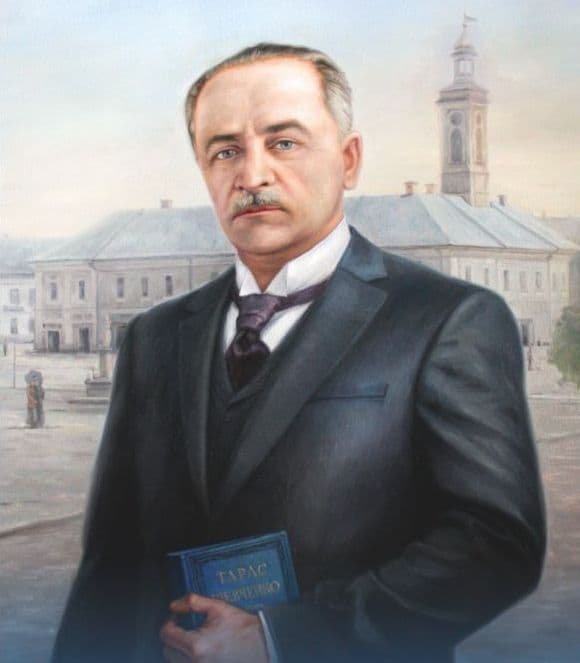
The Regional Communal Museum of Bohdan Lepky is the first and only museum in Ukraine dedicated to this outstanding figure of Ukrainian culture. The museum opened its doors to visitors on 27 August 1995 in the very heart of historic Berezhany, in the Town Hall, a 19th-century architectural monument. The exhibition is housed in five halls, each of which tells the story of a particular period in Bohdan Lepky’s life and creative career, as well as his family and circle of acquaintances. Numerous exhibits recreate the atmosphere of the future writer’s childhood and shed light on Lepky’s extensive cultural and educational work among Ukrainians in Poland and Germany. They also highlight his personal and professional relationships with scholars, writers, artists and other prominent cultural figures in Ukraine and Europe. The core of the museum’s collection consists of materials from Bohdan Lepky’s personal archive, including unique family heirlooms, rare photographs, personal documents and first editions of his works, as well as valuable gifts from renowned scholars, writers, artists and patrons of Ukrainian culture. It is only here that visitors can discover Bohdan Lepky as a painter. The museum’s collection includes more than 80 works by Lepky himself and by artists of his time, including Damian Horniatkevych, Oleksandr Mavberh, Osyp Kurylas, Olena Kulchytska, Andrii Nakonechnyi, Levko Lepky and others. A significant part of the collection is devoted to contemporary artistic interpretations of Lepky’s legacy, represented by works by prominent Ukrainian artists such as Yaroslav Omelian, Oleh Shuplyak, Mykhailo and Oleh Kuziv, Bohdan Tkachyk, Mykola Shevchuk, Vasyl Lopata, Mykola Kaftan, Bohdan Brynskyi, Oleh Kinal and others. The Bohdan Lepky Museum also has an exhibition hall for temporary exhibitions, enabling museum staff to introduce visitors to the artistic achievements of Ukrainian artists and to collections from museums across Ukraine. The museum conducts research, cultural and educational activities, and historical and archival research aimed at studying and promoting Bohdan Lepky’s rich creative legacy. Literary lessons, art exhibitions, workshops, book presentations, themed and dramatized guided tours, meetings with writers and scholars, and academic and practical conferences have become established features of the museum’s programme. If you are in Berezhany for the first time - be sure to visit us! No one has confessed their love for hometown the way Bohdan Lepky did: “Berezhany is the town of my childhood and boyhood years, the best town in the world for me. [...] Berezhany, the town of my youth, the best town in the world for me! Are you as beautiful to others as you are to me? − I don’t know. I only know that he, who has lived within your walls for several years, never forgets you, and in his thoughts visits you as joyfully, as I gladly want to visit you today". The museum is always delighted to welcome everyone who wishes to discover Bohdan Lepky’s life and creative journey and immerse themselves in the unique world of his literary works. The spirit of an extraordinary poetic vision still lingers in this building, where the Great Son of the Golden Podillia region once studied and taught. Here, visitors can find special inspiration for creativity and meaningful human connection.
Reviews

No reviews yet
Be the first to share your experience.
Updated October 28, 2026.
Check opening hours, access rules and safety restrictions with the relevant provider before visiting. Listing does not mean the Department guarantees third-party services.