Museum of Trypillian Culture – Verteba Cave
Museum of Trypillian Culture – Verteba Cave
Location description
The Verteba Cave-Museum is the world’s only underground museum of Trypillian culture, located in the Ternopil region. Wandering through its labyrinthine passages, visitors are immersed in the mysterious world of ancient farmers. The heart of this unique exhibition consists of authentic artifacts discovered directly at the archaeological excavation sites: grain grinders, an enigmatic sacrificial altar, and an ancient clay-baked bed. Thanks to realistic dioramas, a reconstructed pottery workshop, and replicas of weaving looms, the daily life and spiritual world of the Trypillian people literally come alive. We invite you to journey underground and experience firsthand the millennia-old secrets of an ancient agricultural civilization, brought to light by the Verteba Cave-Museum—a branch of the Borshchiv Regional Museum of Local Lore.
About this place
Good to know
- Transport
- Car
- Best time
- All year
- Parking
- Yes
- WC
- Yes
- Shelter
- Yes
- Panoramic view
- Yes
- Location mood
- Peaceful, Family
- For who
- Couples, Families, Companies, Solo travelers, Elderly
Nearby locations
More locations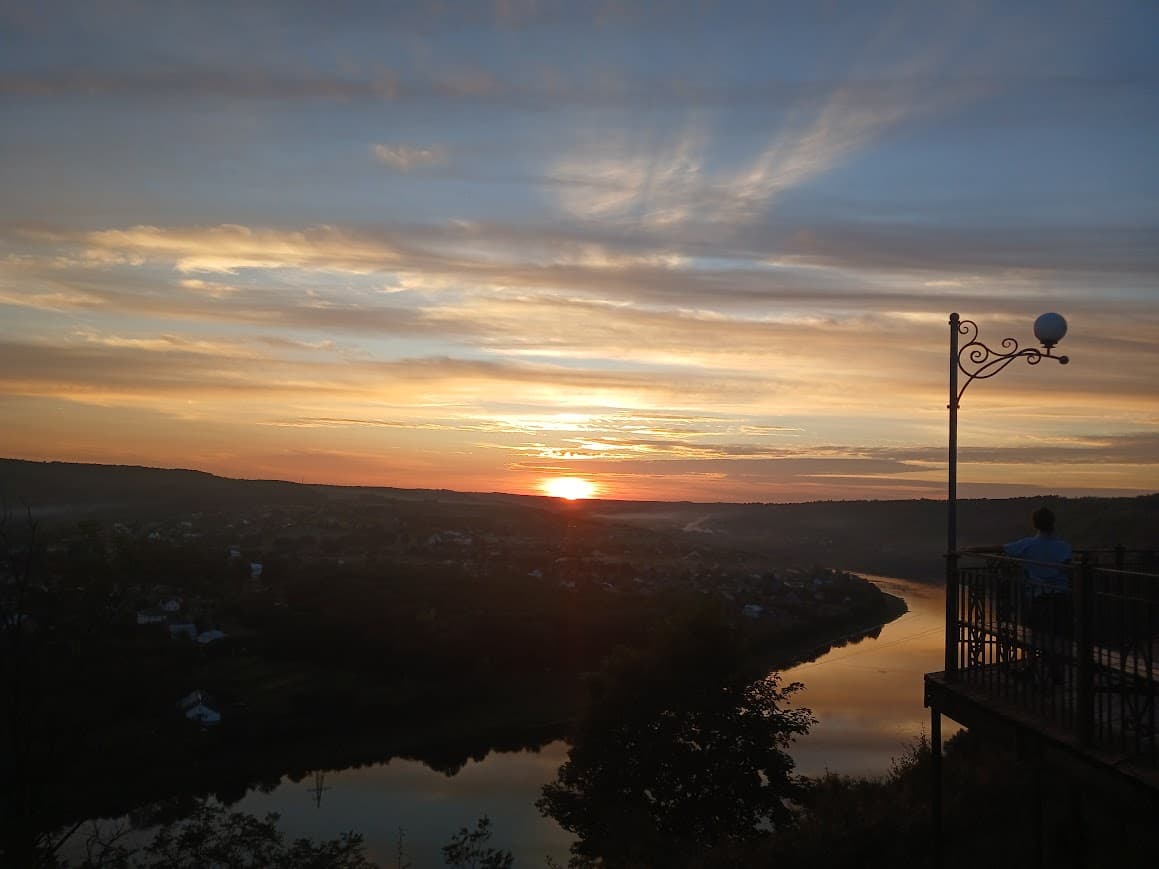
Viewpoint in Molodizhnyi Park
Officially, this park is called Molodizhnyi (Youth Park), but in Zalishchyky everyone simply knows it as the Upper Park - as opposed to the Lower, or Old, Park on the bank of the Dniester. The Upper Park was laid out in the 1950s. It doesn’t stand out for any notable collection of trees, but it has lovely walking alleys and cozy gazebos to relax in. And its main highlight is the view. A paved alley leads through the park straight to the viewpoint. From here, the Dniester opens up in a 180-degree panorama: the river, the canyon slopes, and on the opposite bank - Bukovina. This is where the Dniester forms the border between the Ternopil and Chernivtsi regions. The best time to visit is in the evening. As the sun sets, its rays reflect in the waters of the Dniester, creating what is perhaps the most beautiful sunset you can see in Zalishchyky. No wonder the viewpoint is a favorite spot for locals to unwind and the town’s most popular photo spot.
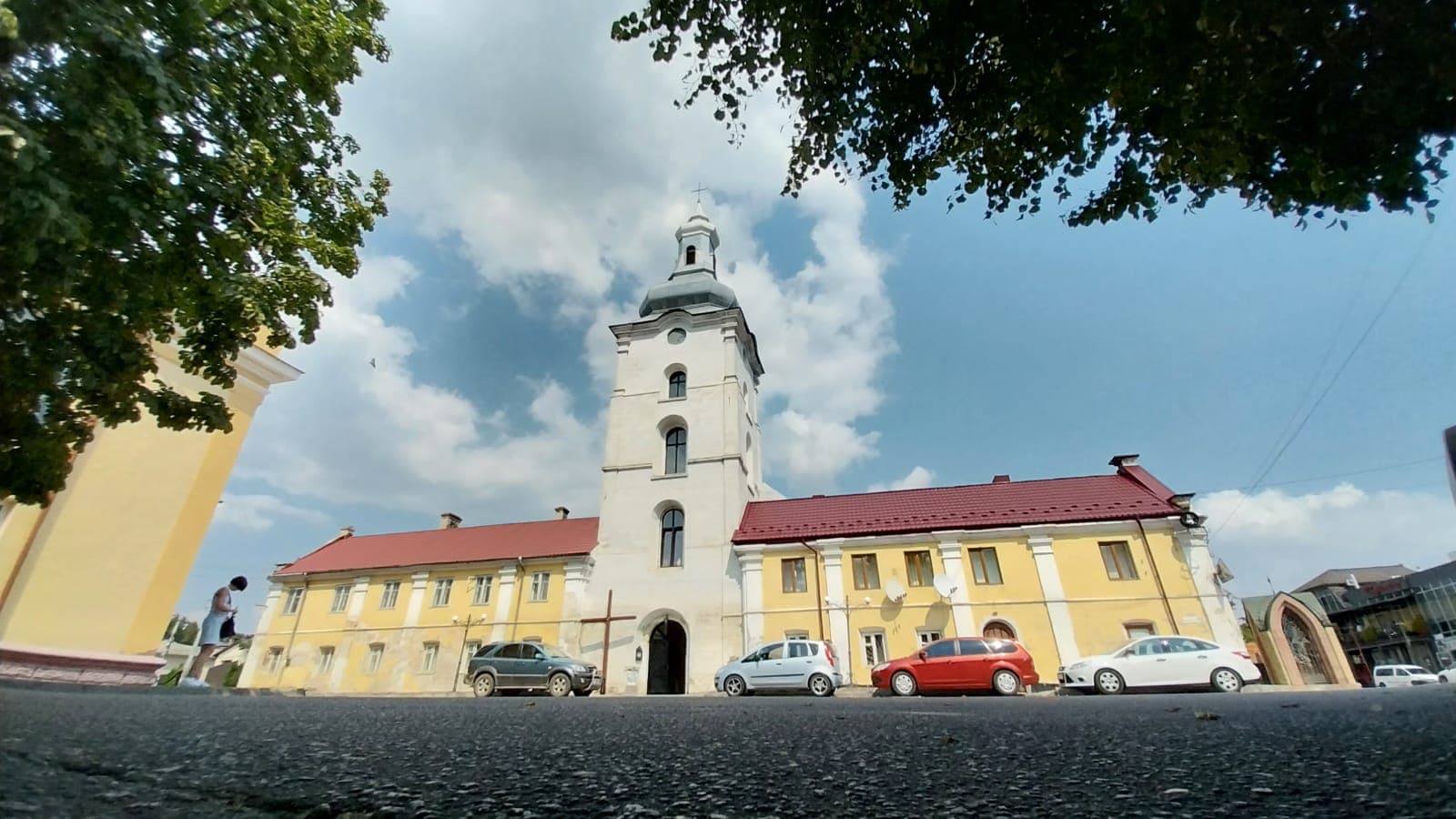
St. Stanislaus Church in Zalishchyky
St. Stanislaus Church is one of the oldest landmarks in Zalishchyky and an architectural monument of local significance. Its construction in 1763 was funded by Stanisław Poniatowski, Castellan of Kraków and father of the last king of the Polish-Lithuanian Commonwealth. This is the same Poniatowski family that produced Prince Józef, who later established an estate in Zalishchyky above the Dniester. The church was built in the Baroque style. It has a rectangular plan, and its main adornment is the monumental façade with a tall tower crowned by a Baroque helm roof. On either side of the tower stand two-story buildings: the parish priest’s house and the organist’s house. The interior is also worth a closer look: above the entrance to the sacristy, a cartouche bearing the Poniatowski coat of arms, Ciołek, has survived. In the 1940s, the Soviet authorities closed the church; it was looted and turned into a salt warehouse. Only in 1991 was it returned to the faithful, and it has been gradually restored ever since. Today it is an active Roman Catholic church, with the parish cared for by the Michaelite Fathers.
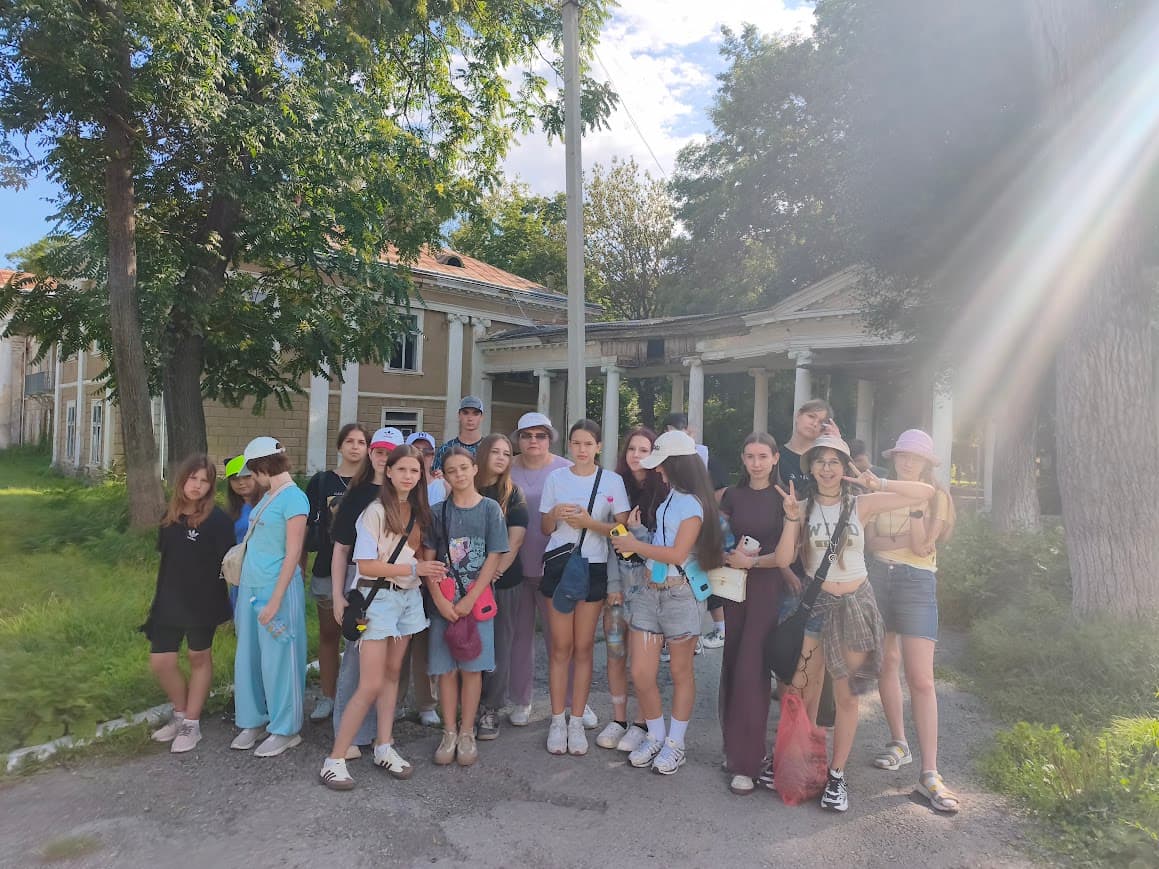
Brunicki Palace
The palace’s history begins in the late 18th century, when Prince Józef Poniatowski established an estate with a small palace on the bank of the Dniester in Zalishchyky. In 1808, the estate was bought by Ignacy Brunicki. In 1831, he built a magnificent two-story brick palace on the site in the Empire style. Around 1839, his grandson, Leon Antoni Brunicki, rebuilt the palace, giving it a Neoclassical appearance. The estate later passed to the de Turnau family, who owned it until 1939. Hence its full name: the Poniatowski-Brunicki-de Turnau Palace. In Soviet times, the palace housed a children’s rheumatology sanatorium and later a department of the district hospital. Sadly, its interiors have been completely lost. Since 2011, the palace has been privately owned. Today, it is a listed architectural monument of local significance. The palace is surrounded by the Lower Park, laid out by the Brunicki family at the same time, which still boasts one of the richest tree collections in the Ternopil region.
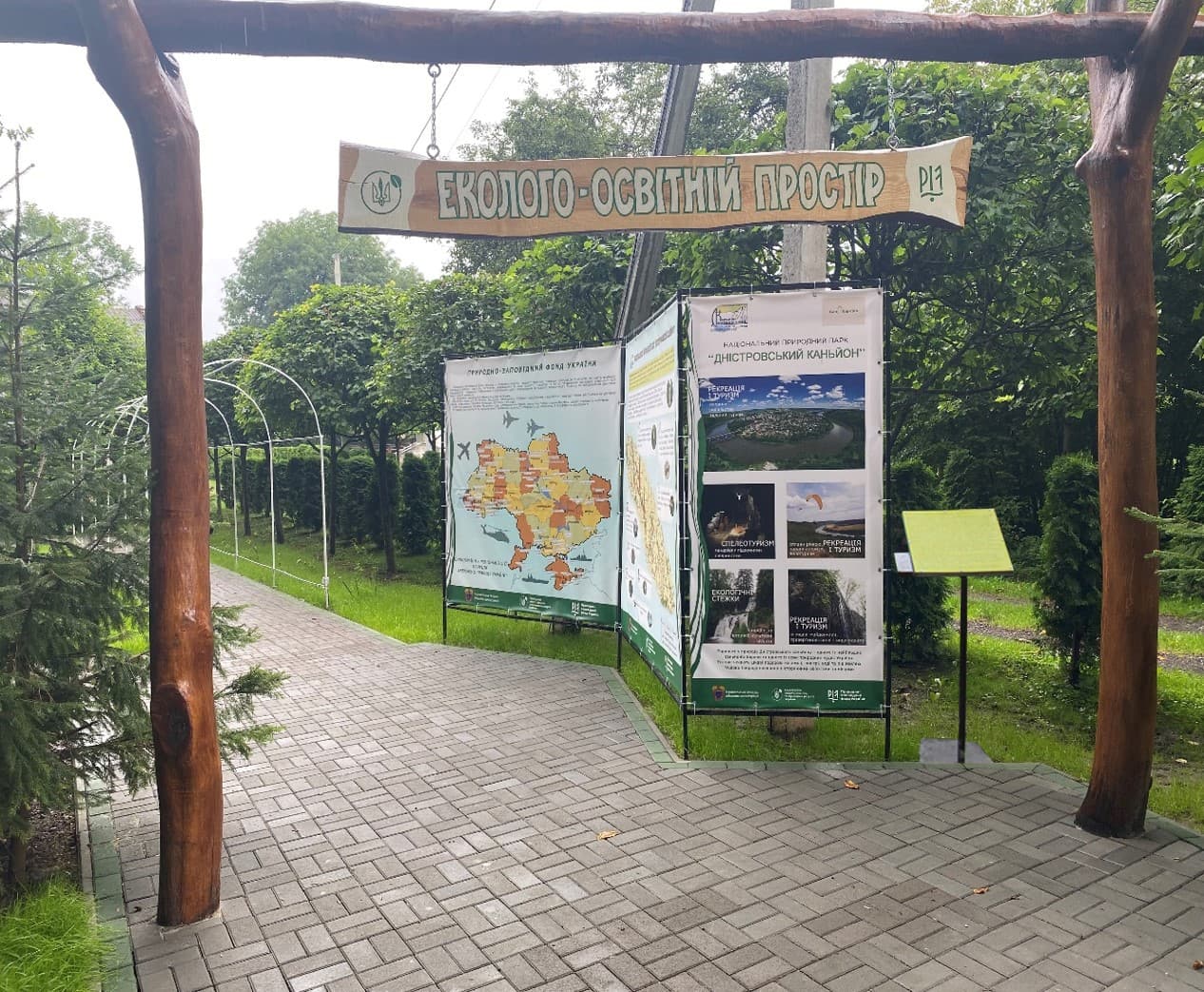
The "Dniester Canyon" Ecological-Educational Space
The "Dniester Canyon" Ecological-Educational Space is designed for visitors to the Dniester Canyon National Nature Park, guests and residents of the town of Zalishchyky, tourists rafting along the Dniester River, and people with disabilities. It features information on the unique nature of the Dniester Canyon, the region's geological diversity, and its local flora and fauna, alongside a "Feel Nature by Touch" exhibit and designated photo zones. The "Dniester Canyon" Ecological-Educational Space integrates harmoniously into the surrounding infrastructure—situated near the Brunicki Palace, the historic Zalishchyky Park, and the Dniester River. This eco-space allows visitors to the National Nature Park and the town of Zalishchyky to explore the natural complexes and features of the Dniester Canyon comprehensively and within a short amount of time.
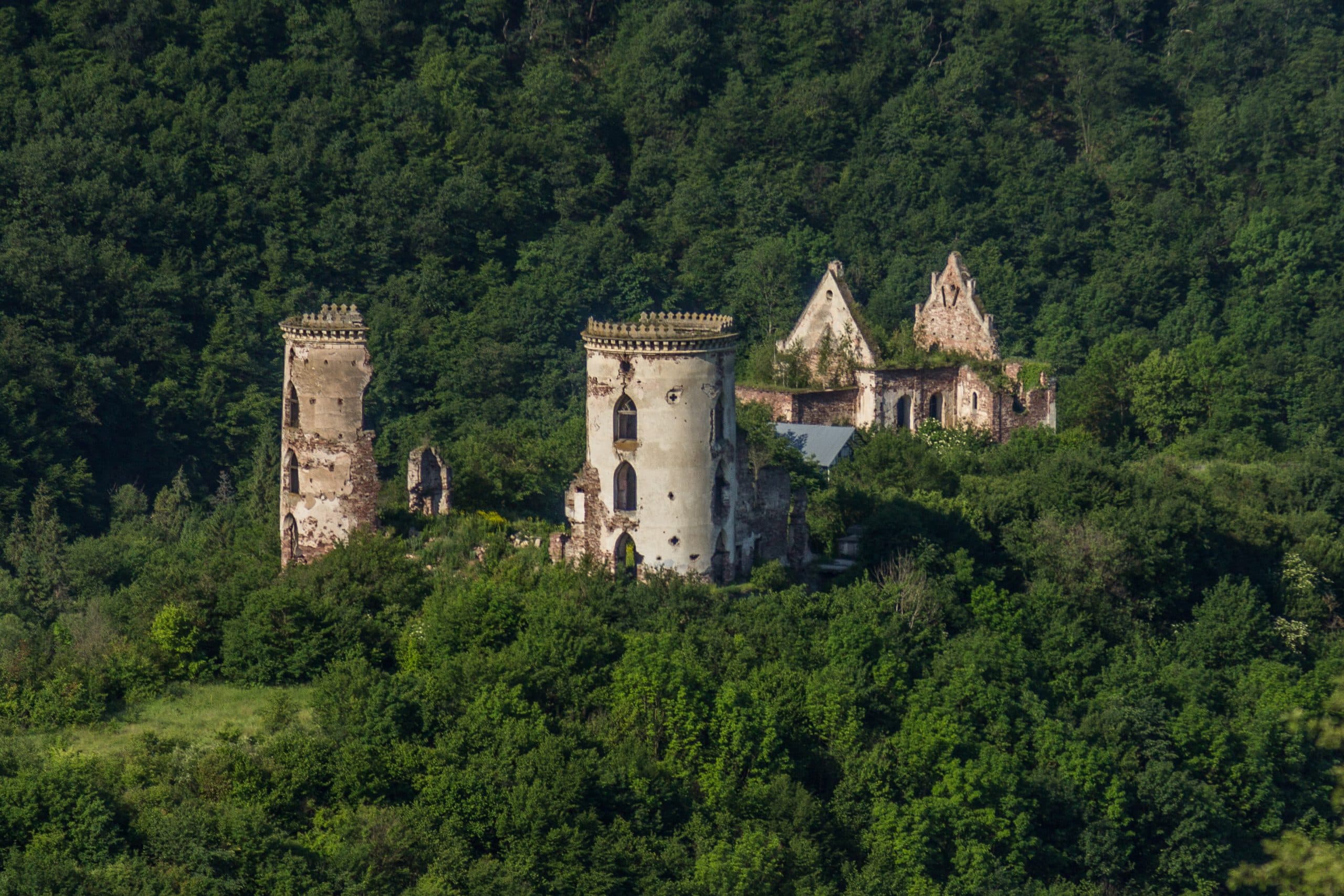
"Panorama" Viewpoint
"Panorama" viewpoint offers one of the best views of the Dniester Canyon — a system of deep river canyons carved into Silurian limestone. From here you can see steep rocky banks, the winding Dniester River, and scenic forests. The viewpoint is part of the Dnister Canyon National Nature Park and is not tied to any specific settlement.
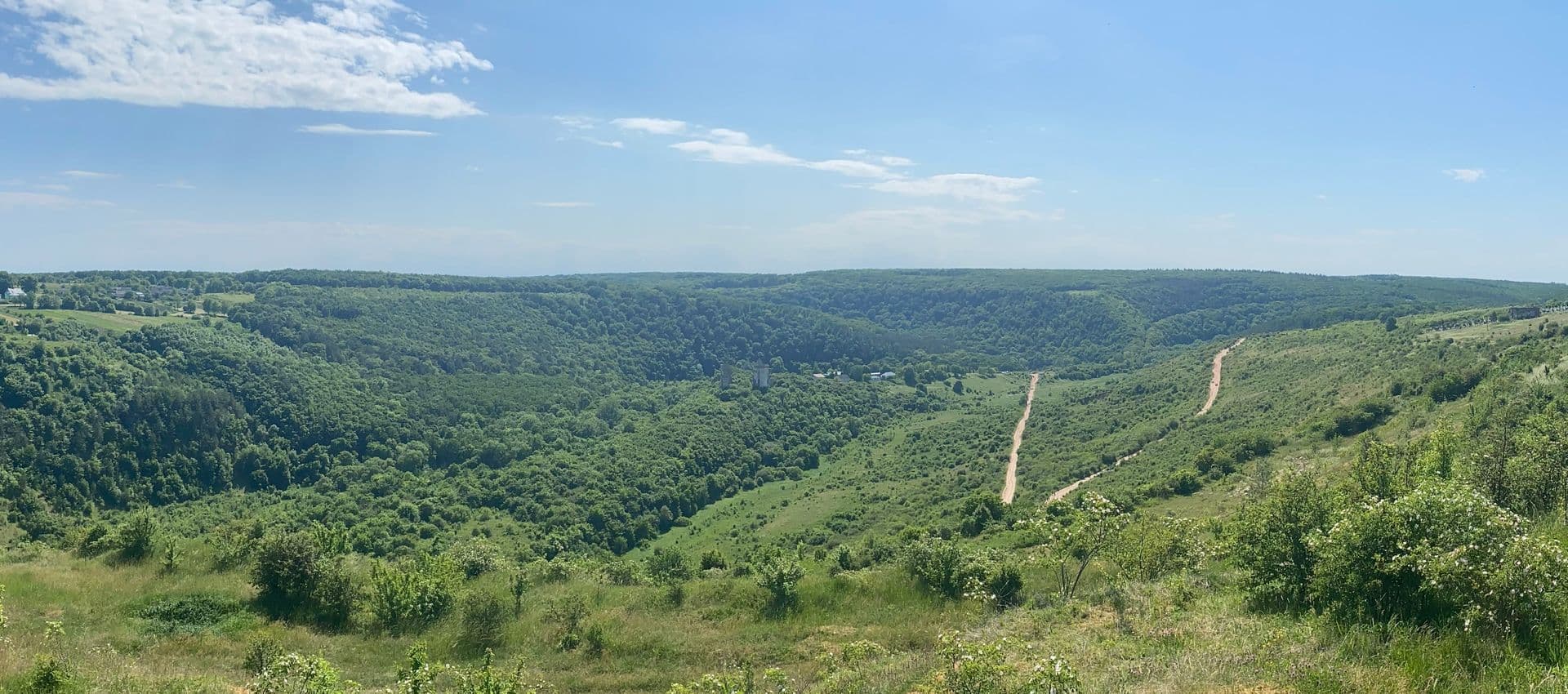
Chervone Tract
Chervone Tract is a signature landmark of the Dniester Canyon National Nature Park and the southern part of the Ternopil region. Its blend of ancient history, stunning landscapes, a picturesque waterfall, and unique natural features draws thousands of visitors today. Situated between the villages of Nyrkiv and Nahoriany in the Ternopil region, the tract forms a unique, bowl-shaped widening of the Dzhuryn River canyon. Amidst green slopes, rock formations, and scenic vistas lie the ruins of Chervonohorod Castle—a silent witness to the region’s long history. The town of Chervonohorod once stood near the castle, leaving behind a distinct historical and cultural legacy. A standout natural feature of the tract is the Dzhuryn (Chervonohorod) Waterfall—one of the most famous waterfalls in the Podillia region. The waters of the Dzhuryn River plunge down in two powerful cascades from a height of approximately 16 meters, creating a breathtaking spectacle and filling the surroundings with the sound of rushing water and a refreshing coolness. To ensure a comfortable experience for visitors, a recreational area has been set up within the tract, complete with tables, benches, information signs, a playground, and a swing. It is an ideal spot to relax in nature, spend time with family, and take in the views of the waterfall. Chervonohorod Tract is a place where nature tells its own story, and every visitor can experience the beauty and grandeur of the Dniester Canyon. It invites you to enjoy leisurely strolls, new discoveries, and a harmonious getaway, leaving you with unforgettable impressions of your journey through Podillia.
Reviews

No reviews yet
Be the first to share your experience.
Updated October 14, 2026.
Check opening hours, access rules and safety restrictions with the relevant provider before visiting. Listing does not mean the Department guarantees third-party services.